Showing posts with label Sandy Wilkie. Show all posts

Wednesday, 7 December 2016

Heights, Hearts & Hollows

Day 8 (Thursday 8th December 2016)


8th adjournment, on 9th November 2016, of the trial of Al-Saadi Qaddafi,
3rd son of the former Libyan leader Colonel Gaddafi. Al-Saadi, a former football player,
and commander of Libya's Special Forces for his father's regime during the Libyan Civil War,
was arrested in Niger and extradited to Libya in March 2014. He is being held (and allegedly tortured)
in Habda Prison. The charges against him murder of the former team coach,
Bashir Al-Rayani, war crimes, false imprisonment and drinking alcohol.

I am always interested to see what writers come up with in response to the Advent Blog theme and Sandy Wilkie has not disappointed. Sandy started out in IT and moved into HR where he could use his analytical skills. After time at Standard Life and then at the University of Saint Andrews (his alma mater where he had attained a first class degree in Geographical Studies), he changed sector to work in organisational development for the NHS in Dumfries (a town where I spent many weeks per annum in my youth). Sandy took some time away from organisational life and found love. He has moved South and returned to working within the NHS - he is now the Staff Engagement Lead at Bolton NHS Foundation Trust, where he works with staff at all levels from Directors to people on the wards and in the broader community. He knows that by improving the quality of the staff experience it is possible to strengthen the patient experience. At work Sandy focuses on workplace culture, organisational values, communication an effective leadership.  Communication comes naturally to Sandy - he is highly creative and a talented wordsmith - a keen observer of the world around him. 


Outside work and creative writing, Sandy is a follower of Partick Thistle - a football club with a rich history and friendly fans. He also has a passion for land and landscapes (as demonstrated in some of his previous Advent Blog posts). As the following post shows, he also has a penchant for music.

******************************************

Heights, Hearts & Hollows  

After the 2015 'Comet Tails and Coal Dust' series of blogs, our host Kate decided to make it even more challenging with her chosen theme for 2016. So 'Heights, Hearts & Hollows' was ostensibly about a world in flux. But I couldn't even begin to address Brexit, Trump or the loss of the original Toblerone shape, so I sought solace in music. 


Three tracks which echo the theme. Three tracks which are loosely connected in time around a 4 year period covering the Millennium, but then take us into 2016. Three tracks which speak to me of flux, optimism, anger & hope. It's time to get out my musical soap box...


'Heights' (1997)

Our story begins in May 1997, when Tony Blair sweeps to power after 18 years of Tory rule.  And in the same month, that word-Meister Paddy McAloon released his album 'Andromeda Heights' with Prefab Sprout. The title track from the album includes lyrics which reflect that sense of optimism about the future:

"We're building a home on the side of a mountainAbove the clouds, next to the skyOur plans are ambitious, a blueprint of wishesThat will come true and when they do"

I still remember the beautiful Spring sunshine on the Edinburgh streets that greeted the Labour victory that Friday morning; there was a real sense of relief & optimism for our country. We had collectively ascended the heights.


Tony Blair campaigning 1997
But that optimism disintegrated when Blair decided to join President Bush in the Iraq War. They couldn't find those weapons of mass destruction, so attempted to justify the reason for invasion (in hindsight) on humanitarian grounds. It felt a bit desperate. It was a moment when politics lost its authenticity and David Kelly lost his life in the woods on Harrowdown Hill, Oxfordshire. I still feel anger to this day.*


So do Heights come before a Hollow? Or are there hearts to be found, scattered around?


'Hearts' (1999)

Two years after 1997, the Beta Band, follow-up their critically acclaimed 3 EPs with a somewhat overblown but creative eponymous debut album. It may not have been a perfect record, but it contained a true gem in the form of a 10 minute track called 'The Hard One'. The wonderful Steve Mason can be heard singing a sample from 'Total Eclipse of the Heart' by Bonnie Tyler:
"Once upon a time I was falling apart, now I'm always falling in loveOnce upon a time I was falling apart, now I'm always falling in love, in love"
In amongst the creative mayhem and general eccentricities of the Beta Band, was an incongruous reference to an 1983 Jim Steinman track sung by a power-balled singer from South Wales. And a true coal miners daughter at that. 

From coal dust to hearts, from the blackness of politics to the true hope provided by love. On the cusp of the Millennium, would love in our hearts conquer all; even the sense of betrayal by Blair that was to follow? And can it still today?


'Hollows' (2001)

Steve Mason was later to record a track called 'Oh My Lord' on his 2013 album, Monkey Minds in the Devil's Time. But Nick Cave & the Bad Seeds did a track with the same title back in 2001. This earlier song contains the lyrics 
"The ladders of life that we scale merrilyMove mysteriously aroundSo that when you think you're climbing up, manIn fact you're climbing downInto the hollows of glamour, where with spikes and hammerWith telescopic camera, they chose to turn the screw"
Nick & Susie Cave had twin boys in 2000, Arthur & Earl. Such lovely innocence at the start of a new Millennium. Yet I don't think anyone can better understand the hollows of despair than parents who lose a child. 

On 14th July 2015, Arthur died in an accident; he fell off the cliff in Ovingdean, near his home in Brighton. I might have felt hollow when Trump won in America, or when the Brexit referendum result was announced. But nothing can possibly compare to the impact of Arthur's death on his parents. That is Hollow. That is the bottom of the pit. That is fucking despair.** Truly.


Flowers left in tribute on the cliff-top where Arthur Cave fell to his death
The harrowing documentary 'Once More With Feeling' (2016) follows Nick Cave and his band recording their latest album Skeleton Tree before, during and after the tragic death of his son. In the film, Nick is bereft; he can hardly recognise himself or sing as he did before. His friend Warren Ellis keeps him going with some friendly cajoling. You see, Warren has a real heart.

It's simply the most powerful documentary I have ever seen. Grief almost tears the recording sessions apart. And yet, in the final two  tracks of the album, Nick Cave talks about the sun rising and everything being alright now. Out of the hollow comes hope. 


Coda

So there we have Heights, Hearts and Hollows captured through music; at moments in time: 1997, 1999, 2001/16. But actually it could be any sequence in time. Heights can crash to Hollows. Those Hollows can generate renewal again. And perhaps our human Heart keeps the candle of hope burning strong.

Make a difference this Christmas, show your heart to those that you love. Keep them close, keep them safe, let them see you care.


* I apologise for the anger
** I am sorry for the swearing 

Sunday, 20 December 2015

Permanence & Meaning

Day 21 (Monday 21st December 2015)


21 shillings was the value of a guinea (after the amount was set instead of being a specified weight of gold).
Guineas derive their name from the area in Africa where the gold from which they were minted was mined.
Some things are still sold in Guineas - e.g. race horses, certain society Ball tickets and a few professional fees.
A guinea is deemed to be worth GBP £1.05. It was a convenient way of determining a fee, e.g. in the past
(before the existence of estate agents) when a house was sold for 4,000 guineas the vendor would
receive £4,000 and the solicitor would get 4,000 shillings (£200). Illustration: 
George III 1775 guinea coin


I first got to know today's author on Twitter (his handle was @LizardVanilla, but he appears to have dropped out of the Twittersphere) and we cemented that relationship when he wrote for last year's Advent Blog series - FYI he wrote the most popular post of 2014/15. His name is Sandy Wilkie. He works as the Staff Engagement Lead at Bolton NHS Foundation Trust, as well as being a highly creative writer and events organiser. Given the importance of the sun in many ancient sites, I am delighted that Sandy's post is appearing today, the day on the cusp of the Winter Equinox (and shortest day of the year). This was often a day when shadows and sunlight held a deep meaning amongst the stones of our Celtic forefathers. Usually the Solstice falls on the 21st December, but it can occur on any day between 20th and 23rd December. This year the Solstice will be celebrated at dawn on the 22nd (i.e. tomorrow), so you have time to witness sunlight on/between stone, if you are near an ancient stone circle. The word "Solstice" comes from the Latin "solstitium" meaning the sun standing still.

------------------------------------------------------------------


On the 9th August this year, I stood in a truly magical place: Temple Wood stone circle in Kilmartin Glen, Argyll. Actually it's two circles, South East and North West, in a small clearing with birch trees around the edges. The whole Kilmartin area is filled with evidence of Neolithic and early Bronze Age occupation.


You see, my mother's ancestors came from Argyll. They are likely to have come originally from the shores of Loch Awe (north-east of Kilmartin) in the late 17th/early 18th Century, one of the ancestral lands of the McArthurs. By the 1780s, there is firm evidence that the shepherds had become surface miners down the peninsula at Campbeltown. The rudimentary mining helped power the whisky stills; my great, great, great grandfather McArthur would have had coal dust on his face.


But back in Kilmartin, and from the late Neolithic period, there are numerous examples of cup & ring markings carved into earthfast rocks and standing stones. There are various theories behind what they mean; symbols to indicate ceremonial worship, perhaps a map of the valley showing new settlers arriving on the western coast where to travel, or a depiction of the stars in the night sky. 


But suspend judgement for a moment. Imagine standing in Temple Wood on a winters evening in 3,500 BC. There is a sharp frost, deer from the woods are grazing nervously. The clear night sky provides a starry canopy from horizon to horizon. A dweller from the Glen looks up. She spots an amazing streak with a blue tail, then a white tail. She falls to the ground, fearing the worst, but the comet passes. The next morning she describes the sight to her fellow settlers. One of them starts carving ring marks and lines to represent the apparition as it travelled across the sky.

Pictish Symbol stone, Aberlemno, Angus, Scotland 
There is a feeling of permanence in a landscape like Kilmartin. Stones that have been set and carved by ancient hands, stand today as a legacy. 


Stand in Temple Wood, listen to the birds, see the sheep grazing nearby, see the leaves fluttering in the wind. History & pre-history sits firmly on your shoulder. 

Yet the world of the 21st Century has a distinct feeling of impermanence; concrete tower blocks demolished after less than 50 years, workplaces that come and go in corporate takeovers, transient social media. MySpace becomes nobody's place. Big data is a fad one year, gone the next. We produce reports about targets that matter only in the moment. We blog vacuously about what we have had for dinner, our own self-importance and how HR is like some bloody science fiction movie. Fucking hell, some of us have truly vanished down the rabbit hole. We have lost our connection with the landscape, the seasons, our roots; and at times our very soul & identity.


So what is the true legacy that we leave as workplace professionals? Do we leave a record of comets in the sky, an inspiring legacy to future professionals? Or do we leave nothing but transient coal dust from our grubby workings in the policy & procedure mines?


19th Century Scottish miners and pit pony
Let's actually change things for the better. Let's make our workplaces more humane by adopting a holistic approach to situations and applying multi-disciplinary perspectives to organisational issues. Let's be creative, let's be build. Let's build the future of workplaces around the concept of interactive communities where there is balance, care, reciprocity and friendship. Let's be altruistic and show compassion to our people. These are the twin tails of the comet, white & blue.
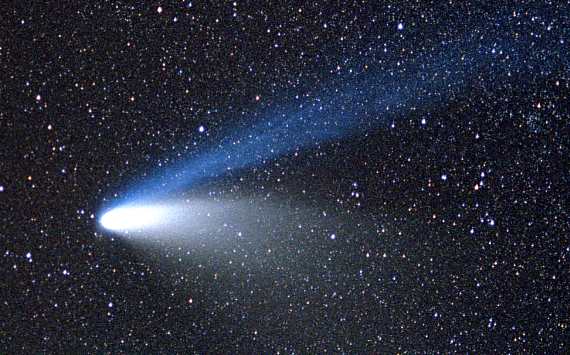
Comet Hale-Bopp's two tails 
Let's stand in Temple Wood and create some permanence & meaning.


Friday, 2 January 2015

No Longer Disorientated in the Haar - Day 34

Day 34 (3rd January 2015)


34 BC was the year in which Cleopatra and Mark Anthony made 
the Donations of Alexandria (seated on golden thrones and dressed 
as Isis-Aphrodite and Dionysus-Osiris, they gave the lands that had 
belonged to Rome and Parthia to Cleopatra's children). This 
theopolitical act lead to the final breakdown in Anthony's relationship 
with Rome and lead to the Final War of the Roman Republic.
Picture: Elizabeth Taylor and Richard Burton as Anthony & Cleopatra, 1963

Well, we are now into the first weekend of 2015 and the Advent pieces are still flowing in. I hope you are enjoying them as much as I am.

Today's post is by Sandy Wilkie. Sandy is a well known voice on Twitter, his handle is @lizardvanilla, where he tweets about music, workplace, history, football, creative writing, food, fine wine and whisky and some very out of plaice fish puns (occasionally very finny). Sandy has nearly 30 years' experience working in UK private and public sector organisations (most recently as Head of OD at the University of Glasgow). Sandy is a talented writer, you might like his geo-Writing pieces

*****************************************************


The Lark Ascending (Vaughan Williams, Nicola Benedetti)

"When the mid-morning comes the sky is the colour of flowering linseed, a pale-blue hint of the full colour to come. Sometimes there will be clouds stretching, tearing, scattering patterns across the fields." - Jon McGregor, 'In Winter The Sky; Upwell', This Isn't The Sort Of Thing That Happens To Someone Like You (2012)
Linseed flower
Authors who set their stories within geographical & literary landscapes have always captured my imagination. From the imagined reality of life on the Fens (Graham Swift, Waterland, 1983) to the more recent landscapes of Argyll (Alan Warner) or East Anglia (Jon McGregor). Framing stories within the landscape creates the opportunity for that connected & poetic 'sense of place'. And sometimes this is soundtracked either overtly by the author, or in my imagined sense of reality.

One contemporary storyteller who brings paths & perceptions to life is Robert MacFarlane. His intriguing short work 'Holloway' (2013) explored the lost deep paths of Dorset. Evocatively illustrated by Stanley Donwood, better known for his graphic album art for Radiohead, the book retraces the tracks of past travellers. 
Illustration for Holloway by Stanley Donwood
But it was MacFarlane's longer book 'The Old Ways' (2012) that I opened again to spark this advent blog. In particular his seventh chapter 'Peat'.

Peatland on the Isle of Lewis
MacFarlane describes his walking journey to trace Clachan Mhànais, 'Manus's Stones', across the peat-draped interior of the Isle of Lewis. A path imperceptible on maps, is only a series of discreet boulders and small cairns marking a safe route across the boggy landscape from the coastal township of Aird Bheag to the summer shielings. 

A traditional shieling (Peat cutter's hut)
It is better preserved in the memory of local inhabitants than in the physical landscape of reality. Resting beside the Dubh Loch beneath the north face of Griomabhal, MacFarlane searches for Manus's path for almost two hours before his eyes click onto a subtle cairn sequence across the peat and gneiss landscape. His patience with viewing the landscape from different angles is finally rewarded. The path leaps from a background blur into sharp focus; his perception of the landscape turns as it were a camera lens. It's almost an epiphany.
Standing stones on the Isle of Lewis
The early 20th century crofter, Manus, described a path that passed them
How many of our own career paths have lazily followed the mountain tracks resurfaced by National Park volunteers or the little neat tracks created and worn by travelling sheep? And what happens when these career paths peter out due to life events such as corporate downsizing, redundancy or illness? Do we have the resilience to cope with being on the edge of a boulder field, lost and unsure how to proceed? How can we find that moment of epiphany to see the way ahead ?

Finding a path through the peat bogs of life
The Callanish Stones, Isle of Lewis, Scotland
My own career followed sheep-trodden paths for 29 years. I smelt the mountain breeze and followed where my intuition took me. When the path ahead forked, I chose what looked the most interesting route across the heather and down by the silver birch trees alongside the burn. 


And so I proceeded from my Geography M.A. degree into Cartography, Map Research, IT then Human Resources. After 14 years of traversing the Glen, I took a compass bearing in 1999 and equipped myself with a PgDip in HRM to start to climb higher. Onwards I strode from the private sector to public; higher education and healthcare. Then, near the pinnacle of my career, in March 2014, the path suddenly stopped as the mist descended on the hill. 


Illness, contract termination, unemployment for the first time in my life. How could I possibly find an epiphany when weather-bound in a strange silent landscape?


Like Robert MacFarlane, I stood there frozen. His two hours became 5 months for me. Paralysed, almost unable to scan the landscape for clues. But with medication, support from friends and rediscovering the beauty of walking in nature, my self-confidence slowly seeped back. One morning in September, I glanced at the path behind me; realising I had been wronged by the University of Glasgow, I summoned the courage to launch retrospective legal action. 

I scanned the hillside ahead and my own epiphany dawned. Picking out the path to the summit by the tufts of flowering wild thyme, I could see clearly now. I have turned my back on a full-time corporate HR role; my future lies in part-time associate work for a creative company, coupled with charity projects and other side interests (eg. cooking, whisky, writing, craft beer). The summit I'm now aiming at is about love; both acceptance of myself for what I am (a bit daft, randomly creative, passionately held beliefs, but with humility) and deep love for a wonderful woman I have met.

Sharon
My physical path is taking me to the mill villages of the Rossendale Valley, East Lancashire, in January 2015. 

Rossendale Valley
My perception is that this is the most exciting chapter of my life, this final section of my life journey now stretching out to the horizon. At the age of 51 I have learned from the paths I have drifted along. Now I have a compass (love) and a walking companion in Sharon. I can see our destination and I know the journey will be fulfilling; our own Clachan Mhànais has appeared in sharp relief. 


So this blog began in the abstract landscapes of East Anglia. It's departure point is in the lands of my maternal ancestors, Argyll:

"From up there you could see all that land; from the Back Settlement westwards where the railway moved into the pass, following the road toward the power station, the village beyond where the pass widened out towards the concession lands. Birches clustered in sprays where the dried-up burns dipped into the streams....Flickers were coming off the loch and the massive sky seemed filled with a sparkling dust above those hot summer hills, fattened with plants and trees." - Alan Warner, Morvern Callar (1995)

What started out as a random career journey of one walker along the sheep paths, has become a clear journey to the summer shielings with a truly wonderful soulmate. For if our careers are to be fulfilling, they have to have the solid foundation of real love at their very core. I'm pleased to say mine now has. I am in a state of mindful peace as we walk hand in hand.


Meteorites (Yann Tiersen, Aidan John Moffat, Clémence Poésy)
_______________