Showing posts with label time management. Show all posts

Friday, 20 February 2015

Palatable Prioritisation

This year has started like a whirlwind – there’s so much to do, with eye-wateringly short deadlines (resulting in short tempers for some), and everyone is convinced that they have a right to pole position in the queue for my attention.

The Tornado Woman - oil on canvas, by Mark Bryan
If I am not to go pop or to tie myself in a knot, I have to prioritise, whist carefully managing relationships with those who are relying on me. So how do I do it?
  • Like many people, I write lists of all the tasks I need to complete and star those that are important either because of impact on the business or because of an time related factor that necessitates the task to be completed sooner rather than later. 
  • I tend to write a list as my last activity of the day/week - when the day/week's events are fresh in my mind. I then review first thing the following morning/at the start of the new week to "sanity check" my plans and confirm that the importance placed on each task is accurate and reflective of business/personal need.
  •  I diarise events and activities - I have in the past used a hard copy file that I put time specific tasks and relevant documentation into, so that, as I work through the weeks and months, the required tasks are not forgotten and are undertaken/completed in a timely manner. I now do this electronically, with early warnings and reminders. 
  • I continually communicate with others, asking people what else they are working on and how what I am doing fits in with/impacts on their plans.
  • I consider the anticipated time required to complete important tasks – I usually find that the more time needed to do a good job, the sooner the project has to commence, if I want to get it finished in a timely and professional manner. 
  •  I tell people what I am doing, to help set their expectations and sometimes this results in plans being changed and work being taken off my plate.
  • I make sure there is no unnecessary duplication, with someone else in another area also trying to do the same thing – one of us will be wasting our time. 
  • I sometimes have to remind myself that ”Good enough is often good enough” – so that I don’t feel that a piece of work has to be perfect when it is more important that it is done swiftly, it just has to be right, fit for purpose and of a standard that is acceptable to others.
  • I look at whether there are any areas/people where/with whom I can come to an agreement to compromise (on time or amount to be delivered) – by discussing the situation with others who are relying on me (and thereby letting them know that I can see that the outcome is important) it makes them appreciate that I am not shirking the task, and that I am trying to accommodate them in a way that suits both sides.
  • I look to see what I can delegate – it is often a good learning experience for someone in my team and takes a bit of the pressure off me.
  • As Sara said in her blog just before Christmas – asking for help is not a sign of weakness and by doing so you often build better bonds with others and make them realise that you value them and their skills.
  • I look to see if there is anything I can use to make a task easier – is there an App or a tool I can use (I’m much faster stringing and slicing beans with the French bean slicer my mother gave me than just using a knife)?
  • It is important not to be knocked off course by those who shout loudest or who are most persistent (or even annoying) - I have occasionally persuaded people to see sense by bringing small groups of people together to discuss and agree amongst themselves what the real business priorities are - this has the added advantage of making them aware of others' requirements and pressures and, if required, an understanding as to why there might be delays or a need to amend plans.


  • Change is a given - do not be afraid of amending your priorities or actions, if so required, when the situation in which you are trying to work changes, but be sure to inform others if things are going to be different, as it may have an impact on them.


  • I talk with others who have had similar challenges to see if I can learn from them – there are often better ways of doing things, problems that can be avoided or different approaches that might not have occurred to me. Do you have a coach, a mentor or know of an expert/experienced person who could help you?

  • I am learning at getting better at saying “No” – I hate letting people down, so it is not my natural response, but saying that you will do something and then  failing to do so is one of the worst ways of disappointing people.


Sometimes I try to prioritise by looking at a task or project from 3 angles – the cost, the scope and the length of time required to complete what needs to be done. You can seldom change one without impacting the others, for example, if I have 4 friends coming for supper on Saturday I can’t change the scope (we will eat supper together) but I could change the cost (for example we could go out to a local restaurant, or I could buy in a pre-prepared food or hire a chef for the night). Hiring a chef could also impact the time element, as two people can prepare a meal faster than one, especially if one of them is professional, which could free me up to do something else. Otherwise, if I need the time on Saturday and cannot afford a chef or a restaurant, I could prepare and cook after work on Thursday and Friday to make sure that I can put a meal on the table at the intended time on Saturday evening.


My final piece of advice may sound counter intuitive, but it does work – give yourself time and be kind to yourself. Sometimes it can be more productive to step away from the pressure and take a bit of time away for yourself. Many people have written about the benefits of yoga, or Street Wisdom or mindfulness. It is true that an uncluttered mind, free from distractions, is better able to come up with creative solutions. I find taking a walk helps me get things in perspective the ideas percolate through my brain, I have a friend who always goes to an art gallery when he needs to get things in perspective, my father fishes – he cannot fret about issues when he has to concentrate on not falling inn and decide how best to catch an elusive sea trout. I am sure, when you return to the problems they will feel less daunting and you will be the better for that and able to get things done.


Breathe - by Pink Floyd, from Dark Side of the Moon, 1973


Whirlwind - oil paining by Lisa Strazza

Monday, 21 October 2013

Time Gentlemen Please

I’ve had a very busy fortnight and at times wished I owned a Time-Turner, like the one used by the character Hermione Granger in “Harry Potter and the Prisoner of Azkaban”, it would have enabled me to be in two places at once.  As it was, between Thursday and Monday last weekend, I drove over 1,000 miles, went to an uplifting concert, escorted my mother to hospital for a significant operation, produced meals for my sisters and aunt, drove across England, (collecting my father en route) to attend a splendid dinner in Cambridge in celebration of 30 years since my matriculation, chatted with precious friends until 3.00 am, breakfasted with old Hong Kong hands who remembered my father from when he was Attorney General, dashed to London for lunch with my in-laws and then drove my youngest son back to his school, before continuing on to Somerset to resume my nursing duties.  At every stage I was reminded of how precious time is and the importance of relishing each moment.

Dinner for the Matriculants of '83
Queens' College Cambridge
Certain seconds stand out like gems on a tiara:


Cambridge Lovers' Knot Tiara
owned by UK Royal Family
  • the look in my mother’s eye as she waited, afraid, on the trolley before being given anaesthetic and wheeled into theatre; 
  • the feisty glint that returned when, back in the ward, her consultant came to tell her how pleased he was with the operation’s outcome; 
  • sitting beside her bed, each of us using an ear bud, listening to the illicit recording of The Sixteen that I had made while we heard them perform in Wells Cathedral the night before she was admitted to hospital (I also bought the CD but had insufficient time to upload it, so I am sure I’ll be excused - their sublime singing kept two women calm) - her grandsons would have been proud of her - not only was she listening to music, but also she was embracing technology (a first for her), reading the first chapter of Wolf Hall on a screen;
  • my father’s laughter as he and I struggled to close his case before commencing our drive;
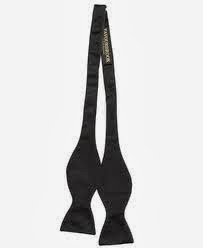
  • tying his bow tie for him as it was proving troublesome - it was the tie he had worn at Cambridge when he was a student, a symbolic item in so many ways - my father lived abroad when I was a student and my parents’ marriage was becoming irreparably broken at the time, so he did not share my student days with me and, although he has memories of attending a graduation ceremony which he believes was mine, it was that of my step sister Jemima - “tying the knot”, so to speak, forged a symbolic bond between us;
  • thirty years late, it was magical to share something with a very special man.  We had lunch at Fitzbillies (just a cake shop when each of us were students), walked together to Queens’  - my college is a coffer full of architectural gems including a true Tudor long gallery, where we had drinks with the President and members of the college; we crossed the Mathematical Bridge hand-in-hand and we both enjoyed chatting with my contemporaries over dinner in the William Morris restored Medieval Hall;
  • seeing Daddy, his face alight with pleasure, sharing memories with people who knew and love Hong Kong;
  • the glow of love in my mother-in-law’s face as she watched the four men she adores most in the world having lunch with her; 
  • seeing the same look on my mother’s face the following day when surrounded by her daughters and sister; and
  • the lip-licking anticipation and sighs of satisfaction when my bottomless-pit-of-a-hungry-schoolboy son shared a delectable Chinese meal with me and the grin he gave when we finished. 

The above list are all personal moments special to me.  I have no doubt that you too have memorable instances that stand out from the past week or year.  The thing that struck me most was how important it is to appreciate the “now” when we have it, rather than worrying about what is to come or fretting about the past.  That brings me to the kernel of this post - the value of effective time management - both at work and at home.


Research has shown that the average person at work gets one interruption every eight minutes, which is circa seven an hour, equalling 50-60 per day.  Most interruptions last five minutes, so it follows that a typical person spends half their working day responding to interruptions.  It is also worth noting that 44% of interruptions are claimed to be self-created by the person whose work is being interrupted.  When asked people have admitted that 3/4 of the interruptions they respond to are of little significance, so most of us waste three hours each working day on stuff that is of little value (http://interruptions.net/literature/CubeSmart-productivity-wp1.pdf).  In addition, it usually takes a person on average 23 minutes to become as immersed in a matter as they were prior to the interruption.  That’s a lot of wasted time every day.  There are no simple solutions, other than being more self disciplined and removing distractions when you really need to focus (time to turn off Twitter, email, texts and the phone with all its addictive apps - I wonder how many human hours have been spent on Candy Crush).


One trick that might help free up some time is enhancing your reading rate.  The average reading speed is circa 200 words per minute.  The typical working person reads for two hours per day.  Speed reading courses can improve an individual’s reading rate to 400 words per minute - that could find you an extra hour per day.  However, we don’t make things easy for ourselves - research has demonstrated that 100 characters per line is the ideal length for on-line speed reading, but that is not what people like to have on their screen.  Despite reading longer lines lengths (100 characters per line) faster, people prefer short or medium line lengths (45 to 72 characters per line).


Perhaps the best approach is simply to ensure that we enjoy what we are doing and hence  are less likely to look for ways to distract ourselves from the task in hand.  When an action is meaningful (such as putting surgical stockings on elderly legs prior to an operation) it is no longer a trial nor a chore; the reasons behind doing something menial or tedious give that task value and purpose and there is a huge sense of satisfaction when it is achieved.  As I know from some of the occurrences in my eventful week, there is little better than having a good laugh - the surgical stockings reduced both my mother and I to tears as we struggled to get them on to her frail legs - fitting a camel through the eye of a needle seemed like an easy job compared to getting teal blue compression stockings over her ankles and up to her knees.  Laughter is proven to lower levels of stress hormones and strengthen the immune system.  Perhaps that’s why compression socks are tricky...its hard not to laugh when struggling with them.  Six-year-olds laugh an average of 300 times a day.  Adults only laugh 15 to 100 times a day.  How sad that the majority of us lose a habit that clearly is beneficial.  By openly enjoying what we do and sharing that pleasure with others, we could make work and our broader lives an even better experience.  Treasure what you have, while you have it, as Van Morrison sings in the following song, “Precious Time is slipping away.”