Showing posts with label respect. Show all posts

Wednesday, 12 December 2018

Twelve Hopes - Day 13

Thursday 13th December 2018


Thirteen is the number of British Colonies from which the United States of America
was formed - this is why the American flag has 13 stripes.
My musical week continues - tonight I am off to the O2 to be at the "Final Bow" of the iconic band, The Pretty Things, who, after 55 years of wowing audiences and fans, are performing their last electric gig. The band was formed by ex-Rolling Stone Dick Taylor and singer Phil May, and have influenced many of the world's most famous artists, including David Bowie, Bob Dylan and the Sex Pistols. I know that it will be wild. 

Today's piece is contributed by Mark Catchlovethe Director of the Insight Group at Herman Miller. Mark is a thought leader on the work environment and what occupiers and designers need to bear in mind when creating great places. If you get the chance to attend one of his events on workplace design and related research, I urge you to go.  I first encountered Mark on Twitter (you can follow him too - his handle is @markcatchlove). He writes an excellent blog and he will make you think. He always writes popular posts for the Adven Blog series, such as our need to be there and shine a light for others. This year's post is more personal to him - he is sharing his 12 hopes for Christmas. My hope is that Mark himself has a wonderful Christmas and an amazing year ahead. I suspect that he will have a peaceful and happy one full of smiles and laughter. Mark is musical - an enthusiastic and accomplished singer and guitarist. Mark is values driven, he does his bit to make the world a better place - such as by running youth clubs and Sunday schools and being a stalwart of his local community. 


***********

"Heartaches, Hopes and High Fives"

Christmas is a mix of all 3 but I wanted to focus on Hope.

Hope is a “feeling of expectation and desire for a particular thing to happen”
So here are my 12 hopes – 1 for every day of Christmas:

1. That we can agree to disagree – coupled with a sense of understanding and empathy.


2. That we can still have unity of spirit, even where there is diversity of thought.


3. That random acts of kindness are no longer random, but a part of every-day life.


4. That in this busy world we take some time to look around us, to observe, to enjoy, to contemplate.


5. That children can be themselves and are not driven into conforming to the educational norms which so often stifle creativity.


6. That we don’t always rely on data to prove what we already know and have called ‘common sense’ for years.


7. That we do not judge others that are different to us and we stop make sweeping generalisations that hinder our understanding.


8. That we can be the positive difference in someone’s life and have a lasting impact.


9. That good manners will be the norm again, where please and thank you return to our everyday vocabulary.


10. That we will take time to listen more and think before we respond.


11. That we are all given respect whatever our age.


12. That you will have a Christmas that outshines all your previous Christmases and it is one to remember for all the right reasons


“May your choices reflect your hopes, not your fears.” Nelson Mandela

Thursday, 24 December 2015

Raising a Glass

Day 25 (Christmas Day - Friday 25th December 2015)


25% of humans are dichromats according to Prof. Diana Derval. The colour nuances
we see depend on the number and distribution of cones (colour receptors) in our eyes.
Look at the above spectrum, if you see less than 20 colours you are a dichromat, like dogs,
which means you have 2 types of cone (and probably like wearing black, beige and blue).
If you see 20 - 32 nuances you are a trichromat with 3 cones (in purple/blue, green and red areas).
50% of us are trichromats. Seeing 33-39 colours makes you a tetrachromat, like bees. You have 4 cones
(in purple/blue, green, red and yellow areas. You are likely to find yellow irritating.
If you see more than 39 you are making things up - there are only 39 colours in the test
and your computer/smart phone probably only translated 35.

Like last year, in honour of her founding the Advent Blogs series back in 2011, the Christmas Day post is by Alison Chisnell. Alison is an inspiration to many of us - courageous, ethical, knowledgeable, compassionate and warm. She is an exceptional HR professional (in September she became the Head of HR for the Risk Consulting division of KPMG) and a devoted mother, a valued friend and an inspirational runner and trainee triathlete. She was one of the first to welcome me into the Twitter HR community (her handle is @AlisonChisnell) and I responded when she asked for contributors for the first Advent Blogs series. We are friends and I have huge professional and personal respect for her. She is an excellent, but sporadic, blogger - you can read her words on her blog - The HR Juggler.

----------------------------------------------------------


Can you see me? Can you see what I’ve done? My hands are dark with toil,


Coal miner's hands by HayNateHaywood
my brightness lights up the sky. 


Hale Bopp in 1997 - Credit Bob King
I persist, I endure, I inspire, I remember.

We are all authors of our own stories, we all choose how we want to remember our year. Comet tails and coal dust, beautifully juxtaposed, fleeting brilliance and relentlessly hard graft. Tangible progress others can see, incremental achievements visible only to ourselves. How human that we want to tell about them, to share, reflect and relate. This is me doing just that, knowing that they may only matter to me alone.


Time heals. If last year was dominated by redundancy, this has been the year of in-between, of embracing the not knowing what is coming next, of pushing some of my personal boundaries further than I thought I could. Ambiguity, uncertainty, discovery, adventure, pride.
This year I’ve had the gifts of time and of uncertainty. It’s been the only year I can remember where I have held three very different jobs and generous gaps between each, which have enabled me to reflect, savour, enjoy and grow. 


There has been coal dust, of course there has, moments both passing and persisting of self-doubt, apparently promising opportunities fading to grey and impatience for change to arrive.
What I choose to remember though, is this:
  • Sitting in the morning sunshine of Sydney harbour, drinking coffee with my husband while my children play around me, savouring the sense of freedom and contentment, knowing that this moment has made the journey to that point entirely worthwhile. That without the personal upheaval and change, we wouldn’t have taken the leap of making the trip and that our horizons have grown as a result and that they will not shrink back.


  • Running the London marathon in pretty much the form of my life, (almost!) effortlessly pacing 9.5 minute miles to well over 20 miles, the joy and excitement of crossing Tower Bridge with my good running friend, the enormity of crossing the finish line, knowing that I’d given it my all and achieved what I was capable of, the best version of my running self. It seemed impossible until it was done….and already, only a few months later, it starts to feel impossible to replicate!


  • My first foray into triathlons, pushing myself out of my comfort zone, persevering with front crawl until I can finally now regularly swim well over a mile without stopping; plunging myself into a cold, slightly murky lake and discovering I love the freedom of open water swimming.

These are my comet tails, my marks in the sand, my experiences this year that remind me that I am capable of so much more than I think, that pushing boundaries holds its own rewards.

And yet, there have been quieter moments during the year that have changed me and my perceptions too. Those that don’t leave a trail of stars, but imprint their memory on my consciousness just the same. I struggle to articulate the power of the in-between, the glorious terror and freedom of declaring myself between roles, in transit, open to opportunities… the simultaneous sense of being rudderless and yet also liberated from being hemmed in by labels, restrictions, expectations. 


The power of choice, of self-control, of holding my nerve, of going with the flow, of trusting that things will work out, the understanding of what is within my control and the many things that are beyond it, the gradual emergence of a stronger, more resilient personal and professional confidence. Rather like the memory of the Sydney sunshine, that makes the journey fully worthwhile and one that, in hindsight, I would not change.


So, this Advent, may your comet tails shine brightly and illuminate your hopes for the year to come. May the coal dust shape our thinking and experiences, enabling us to find the diamond within that hard, dark, uncompromising rock, providing us with the energy and enthusiasm we need to move forward. May this Christmas time, this New Year be a happy, healthy, positive and prosperous one for you and your loved ones and let’s raise a glass to ourselves and each other. 


Merry Christmas!  


Sunday, 27 September 2015

The Art of Leaving

From being a teenager onwards my father has delighted in teasing me with the following rhyme (written by Ogden Nash in the 1930s, when women wearing trousers were frowned upon): 
Sure, deck your lower limbs in pants;

Yours are the limbs, my sweeting.
You look divine as you advance –
Have you seen yourself retreating?


This is neither a post about sartorial elegance nor a debate as to whether the female figure suits a skirt better than britches, instead it is a few thoughts on “retreating” – leaving a job and saying goodbye.

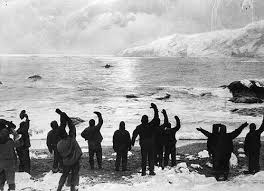
The Antarctic survivors on Elephant Island waving farewell
to Shackleton and the James Caird crew, April 24 1916
 

During my career I have encountered many “retreats”, some simple resignations because an employee has an attractive offer that will forward their career or quality of life, others forced departures due to sickness, personal circumstances, inappropriate conduct or business need. I must confess to finding the latter, which are predominantly accomplished through redundancies, particularly challenging, as they impact on people’s lives and yet the exit decisions are made by the business according to organisationally defined criteria, often with little thought to the impact that verdicts will have on the individuals and their families. No matter how much you stress that the exits are not a reflection on those who are impacted (both the people leaving and those left behind), but are based on an assessment of the roles they fulfil, it is hard for those selected (unless they have opted for voluntary redundancy) not to feel their forced departure on a very personal level.  I see one of business leaders’ and HR’s primary roles as ensuring that leavers, as well as joiners, have as good an experience as possible.


I discovered yesterday that I have been included in a book, How To Stand Out, by Dr. Rob Yeung, the leading UK psychologist, author and orator – he and I have known each other for over a decade, having worked together and I hold him and his work in high regard. Nearly a year ago, we had an interesting discussion about careers, values and impact; I thought what I had said were just words lost in the breeze at the end of the evening, but, in addition to acknowledging my desire to continuously learn and grow, he picked up on my determination to always treat people with respect and understanding, especially during times of change and transition. In the book he has used some examples from my past to illustrate how businesses can achieve the best outcomes both for themselves and exiting employees.  In 2008/9 my team and I went out of our way to secure new roles for people who were being made redundant, when we had to lay off 20% of the workforce. We flew HR directors and recruiters in from overseas locations where there were opportunities, to enable them to select their new hires from our excellent staff. All parties were happy with the outcome. In my opinion, the world would be a better place if more people considered the impact they have on those around them and made an effort to soften the blow, so that those leaving and those left behind can get on with life without undue anxiety. Seven years later I am still in contact with (and friends with) many of the people who set out on new paths at that time. Some have even thanked me for the opportunity it presented that has changed their lives for the better and commented on the consideration I showed during tough times – even now their comments are a truly humbling experience.


The need for respect works both ways – when a person chooses to leave their employer, the manner in which they resign and then conduct themselves in the lead up to and following their departure is important.  In reality, few people wish to go leaving a lasting bad taste in the mouth of their former boss and colleagues (and this is not just because they are concerned at getting a bad reference); who knows what the future will hold? I have on more than one occasion been involved in an acquisition where there are employees on the other side who find themselves becoming colleagues again with people they thought they had said “goodbye” to. So, my advice is be careful what you say in your resignation letter – although, there are times when you have a duty to inform the company as to what is causing your departure, especially if ethics or workplace issues are involved. If there are things that can be done to make a better environment then you have a duty to explain, as the information should be used to improve the workplace for others after you have gone. 


One of the most popular resignation themed posts on Forbes is a very frank explanation by a recruiter as to why she felt compelled to leave. It is clear from follow up interviews with her that she has no regrets at being so honest and that her letter has acted as inspiration for others. However, a resignation should not simply be an opportunity for revenge and bad-mouthing. 


Despite the end of the Job-for-life there is a duty of trust and care that rests on both an employee and their employer. Individuals are expected to work to the best of their ability whilst employed, in exchange for a salary and benefits, the chance to develop and a suitable place to work; in return an employer should respect those who toil for the benefit of the business. Managers and leaders should do their best to treat staff with courtesy – communicating in an honest and open manner, paying a fair wage and treating employees with trust and appreciation.


Advice to those about to leave: 
  • tell your boss first, before you speak with others– your manager/supervisor should never find out via someone else that you are planning to go;
  • discuss the timing of your departure and, if needs be, agree to stay until a certain matter is concluded or goal achieved;
  • once the decision is made and public, refrain from talking overmuch about your new opportunity;
  • stay focused on what needs to be done to ensure a professional departure; remain considerate to others especially as some of them may be having to take on some of your tasks and responsibilities;
  • offer to help and leave detailed notes or provide a personal handover for those who will have to pick up where you will leave off;
  • be appreciative - use the opportunity of your departure to thank people and provide feedback  to them (positive as well as constructive) – this may be your most important legacy; and
  • contemplate what went well and what you could have done better in your old role - were there things you loved or are particularly pleased to have done? Are there situations, types of people or aspects of your job that you should avoid in the future? Learn from your mistakes and figure out how to improve on your triumphs, so that you can develop your skills and be even better in your next role.


The best departures are those where you appreciate that the time is right to go but retain the memories and an appreciation of the benefits and the good things you gained from the time with your employer and colleagues.. In the words of the Pulitzer Prize winner, Ellen Goodman:

There’s a trick to the Graceful Exit. It begins with the vision to recognise when a job, a life stage, a relationship is over – and to let go. It means leaving what’s over without denying its value.

And finally, be happy and celebrate the good times (both those that you have enjoyed with your employer and those yet to come). Fireworks may be excessive but farewell drinks are the norm…

Washington's Farewell by Alonzo Chappel, 1866
So to end where I started, and close with a “retreat”, namely a piece of military history and pageantry that would provide a spectacular finale to the end of anyone’s employment – Beating Retreat. This ceremony was originally called the “watch setting” and occurred at sunset by the firing of a single round from the evening gun. It has its origins in the early days of chivalry, when it was customary to end the day’s fighting by signalling to soldiers to return to camp and to commence the mounting of the guard for the night. In 1690 James II of England ordered the use of drums to beat an order for troops to retreat, this was expanded in 1694, by William III, who proposed that regimental drummers respond to the initial notification. Beating Retreat is now one of the most spectacular military ceremonies in many countries around the world. So I shall sign off with pomp, ceremony and a grand climax of fireworks. Farewell.


Sunday, 15 December 2013

Kiss and Tell

The holiday period is pounding towards us, my timeline is full of people competing for the best dressed tree and so, not wishing to let the side down, my next few posts will have a seasonal twist...


I confess, I love Christmas: the sharing, smiles and sparkle, but I also find it a good time for contemplation.  There is much to be said for the ancient approach towards Yule with its focus on regrowth and renewal.  Long before we started competing for ownership of the most tastefully tinselled tree, evergreen branches were used to decorate homes, as a reminder that the days will lengthen, plants will sprout and crops will grow.  I tend not to make New Year’s resolutions, as I believe that positive change should not be limited to a once-a-year action, but I find the pictures of holly and mistletoe a good reminder of the need to renew bonds with colleagues and actively to reforge relationships with others if they have become strained due to the pressures of work earlier in the year.   I am writing this post on the day of Nelson Mandela’s funeral.  He is an excellent reminder to us all of the power of forgiveness and the potentially great outcomes that can be achieved through forging relationships, despite earlier tensions.
“If you want to make peace with your enemy, you have to work with your enemy.  Then he becomes your partner.”  Nelson Mandela


Exit interviews and research both show that the most common cause for people choosing to leave their job is a bad relationship with and lack of respect for their boss (http://businesspaths.net/Articles/12/people-quit-their-boss-not-their-job). Research also shows that January is the most popular month around the world for people to start looking for new opportunities (so if you have bridges to build, you’d better get a move on; there are only a few weeks of December left!).  Did you know that the average tenure of employment in the US is now 1.5 years?  It may be traditional to give valuable gifts at this time of year (gold, frankincense and myrrh spring to mind), but very few people choose to leave because of pay.  They go because of managers’ inability to engage with them.  There are not many of us who are happy to work without a sense of purpose - people need to appreciate the vision that the organisation is trying to achieve.  It’s not a budgeted profit number that inspires, it is the knowledge that what you do makes a difference and is worth striving for - vision fosters financials and not the other way round (http://www.forbes.com/sites/louisefron/2013/06/24/six-reasons-your-best-employees-quit-you/ ).  Clearly, in order for people to understand what they are doing and why, you need to communicate with them.  The simple act of speaking with the individuals in your team, understanding their points of view and taking time to explain your drivers, will do much to strengthen the relationship between you.  An empathetic and honest conversation goes a long way towards enabling trust and mutual respect.  The last factor that makes a difference to people is fun - humans are social and prefer to work in an enjoyable environment where they feel valued.  


Last week I took two of our London-based teams out, to celebrate the end of the year and to thank them for all they have done over the past twelve months.  Instead of just going for lunch, I planned an outing that would appeal to all of them.  I took them on a mystery trip, where we all took part in a game, that played to our strengths, before relaxing together over a meal.  I know that sounds a bit like HR-contrived-team-building.  However, I’m pleased to say that it didn’t feel like that.  We had fun, even those who don’t usually socialise got on well and everyone had a good time - lots to laugh about.   Two of the more junior team members clubbed together to buy me a personal thank you gift, which they left wrapped on my desk the following day.  I am touched and delighted that I made them feel special.  One person, a good worker who has been with the firm for seven years, commented that it was the first time that senior management had made an effort to make him feel valued - that is a sad statement.  Are there people in your organisation who would say the same?  What’s the risk to your business if you lose them?

We played HintHunt to unlock talent and enhance communication
We are all familiar with the workplace joke that employees are like mushrooms - kept in the dark and fed s@*t.  I think maybe we should view employees as Christmas mistletoe.  It will only grow on a thriving tree and, because it has leaves, it can create its own strength instead of being a dependent parasite.  The name mistletoe means “dung on a twig” (from the Anglo-Saxon “mistel” - “dung” and “tan” - “twig”) - if you don’t treat your employees with respect and communicate with them that is how they will feel and they will be likely to leave you.  The reason for the name is because the ancient Europeans believed that mistle thrush droppings miraculously transformed into the plant - they did not appreciate that the seeds were carried to trees by the birds.  As employment patterns change we increasingly will need to attract migrant skills to make our organisations stronger and to ensure that projects and objectives are achieved.
   
Mistletoe growing on an apple tree
We kiss under mistletoe because of ancient Norse beliefs.  In brief, the goddess Frigga’s beautiful son, Baldur, was killed by a spear made of mistletoe - a wicked trick by another god, Loki.  A hero was appointed to ride to Hel (the place for dead souls not killed in battle) to bring him back.  Baldur’s return was agreed on condition that all living things wept for him.  They did but there was one exception, a giantess (whom many believe was Loki in disguise), she shed no tears and hence Baldur had to remain in Hel.  To make amends in a difficult situation, Frigga decreed that going forwards mistletoe should bring love and not death to the world.  Any two people meeting under mistletoe should lay down their arms and embrace in memory of Baldur.  It is an easy step from this to the modern habit. In the past it was thought that each berry was one of Frigga’s tears and, in many places, you had to pluck a berry off the shrub each time you kissed - when there were no more berries there was no longer an excuse to kiss.  It is more probable that the reason mistletoe is connected with kissing and uninhibited erotic/sexual abandon is due to its ancient use as a preventative for pregnancy.  It was also valued for its ability to remain verdant during the winter, despite not being rooted in the soil, when the trees on which it grew appeared to be dead.  In Celtic mythology mistletoe was loved for its vibrant growth during harsh times and also for the fact that the branch, traditionally cut to decorate the home over Yule, was retained and gradually turned golden in colour over the following year (hence the “golden bough”).  I like the symbolism of it being able to enrich the home as time passes, as well as the immediate joy it can bring.

This print shows Loki guiding the blind god Hother to kill Balder
with a branch of mistletoe. (from an 18th century Icelandic manuscript)
Take mistletoe as a source of inspiration: I’m not espousing physically embracing your colleagues, but communicate with them, value them for who they are and what they bring.  Take advantage of the next few weeks to “kiss and make up”, so to speak - build bridges and strengthen relationships.  We rely on those around us and they are the secret to a golden future.


by Lois Wain