Showing posts with label chocolate. Show all posts

Saturday, 13 January 2018

The Wisdom Within - Day 45

Day 45 (Sunday 14th January 2018)
45 years - the length of time that Margrethe II of Denmark has been on the throne.
She was crowned on the 14th January 1972. Margrethe is the first queen to have
ascended the Danish throne since 1412 and the first Danish monarch not
named Frederick or Christian since 1513


Today I am driving to Durham.

It gives me huge pleasure to welcome back to the Advent Blogs series my former colleague and on-going friend Katharine Bourke. She is a co-founder and Director of South West Growth Service (@SWGrowthService), a consultancy that supports small businesses, enabling them to develop, adapt and grow. Katharine is a certified mBIT coach (for those who don't know, mBIT stands for multiple brain integration techniques). Outside work, she is keen on walking and exploring the beautiful countryside where she lives. When Katharine and I worked together we were based in London, but she was born and raised in a farm on Dartmoor and she has returned to her roots (but not farming, although she is helping things grow). Since moving West she has founded a successful IT business and spent four years helping to deliver the government's Growth Accelerator and Business Growth Service in Devon and Cornwall, before co-establishing the South West Growth Service.

Katharine has many varied interests and knowledge that she shares. I recommend that you follow her on twitter (her handle is @KatharineBDevon) and she assure me that 2018 is the year when she is going to resume writing - so watch out for her posts, articles and blog...
PS Most of the pictures have been provided by Katharine herself.

***********************************

Darkness and Dawn: The people who inspire us and our wisdom within

As another year draws to a close, so begin the flurry of ‘best of’ summaries, which always make me reflect on the year that has passed. When Kate asked if I’d like to contribute this year, I thought long and hard and the topic that keeps coming back is a memory of someone really important to me which aligns with thoughts about the wisdom we have within.

With all the distractions of modern day life, it has become all too easy to ignore our inner voice, distracted by the next ‘must watch’ series on Netflix, whatever is trending on Twitter not to mention the constant challenges of keeping our home and work lives in some kind of balance. Everyone I speak with seems to have a tale of how they started searching for something on the internet only to find themselves somewhere completely different before they go back to what it was that they were looking up (and I blame the growth of digital remarketing for some of this!).


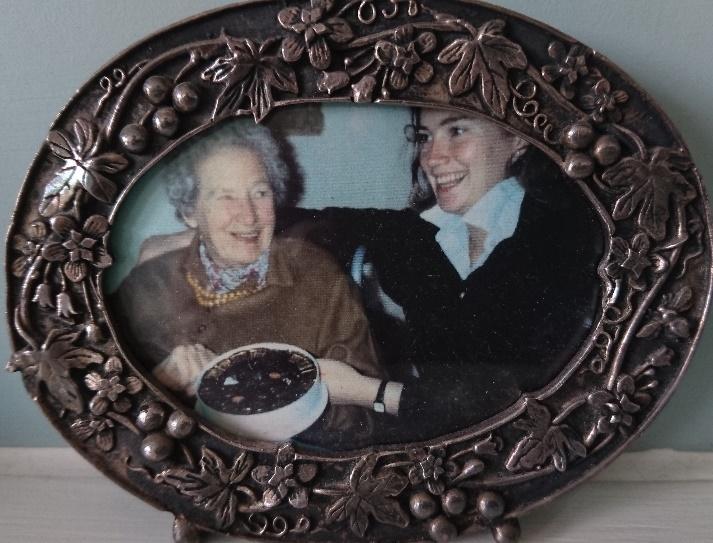
I feel I began to understand that we all had inner wisdom thanks to the wonderful relationship I had with my grandmother. She was physically disabled by a car crash near Dawlish in 1971, when I was 4, and as a result she lived with or near us for most of my childhood.  She was a remarkable woman, an avid reader, a lover of classical music, good coffee and great chocolate. Some of my fondest memories were Sunday mornings when she would make good coffee and serve it along with something extraordinary. I may not have drunk coffee in those days, but as a little girl growing up on a Dartmoor farm in the 70s and 80s I loved trying all the tasty things she had discovered! When I started working in London, I spent many hours in an era before the internet, tracking down a chocolate maker she had shared stories about, none other than Charbonnel and Walker, who were then only available from their little shop in the arcade off Bond Street. This was of course long before anything like an internet search engine. All I had to go on was her tales of them being delivered to the Scottish estate where she was working, and a London telephone directory or two. I was thrilled to find them and be able to give her a box similar to those she’d told me about on those mornings, wishing her a happy 90th birthday in lettered chocolates:


She also encouraged me to listen to music and put into words what I heard, what it meant to me and how it made me feel. It was like a game then and I loved giving it a go. Listening to Chi Mai, used as the theme tune for the Life and Times of David Lloyd George in the 1980s, always provokes a happy tear as I remember sitting in her lounge, trying to describe what I was hearing:


https://www.youtube.com/watch?v=R-0UhCjwUeg Try it. Do you hear a river? Or do you hear something else…?

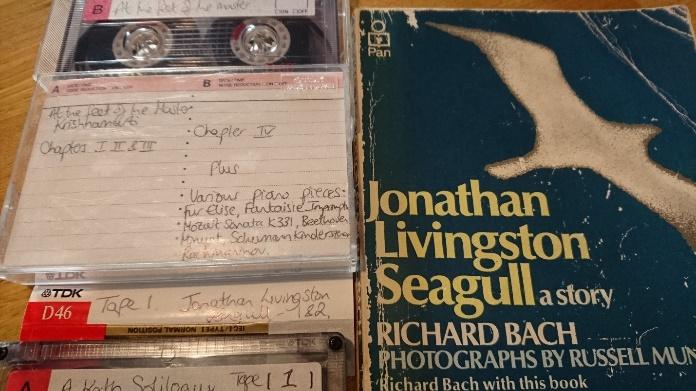
Despite her physical frailty, she continued to live her life as fully as she could with the adaptations that were available to her then (a walking frame to start with and a pretty basic wheelchair as she aged). She listened to her music, and as her sight deteriorated with age, and audio books were only just beginning, I loved spending time reading her favourite books to her onto cassette tapes as I was no longer living at home. I still have the recording I made for her of Richard Bach’s ‘Jonathan Livingstone Seagull’ along with one of Krishnamurti’s ‘At the Feet of the Master’.


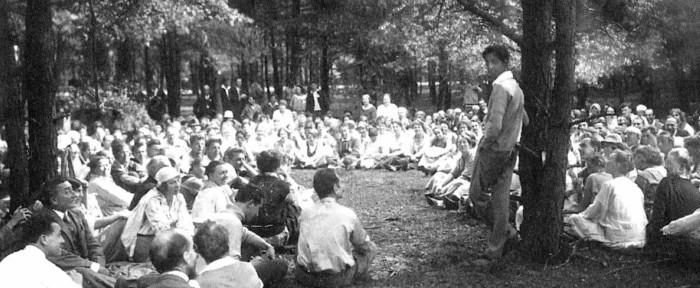
In her late teens and twenties my gran spent time with all kinds of discussion groups including Theosophists which culminated in a visit to Ommen in the late 1920s to hear Jiddu Krishnamurti speak. I will always remember the way she described being out walking in the woods when she came across him, walking alone between sessions. Her recall of that moment was powerful. She spoke of the way he made her feel even though they didn’t speak, how he seemed so serene and peaceful, at ease in his body, taking time out in the beautiful woods near Castle Eerde. This photo reminds me of that moment, even though it is one of him in front of a large crowd:


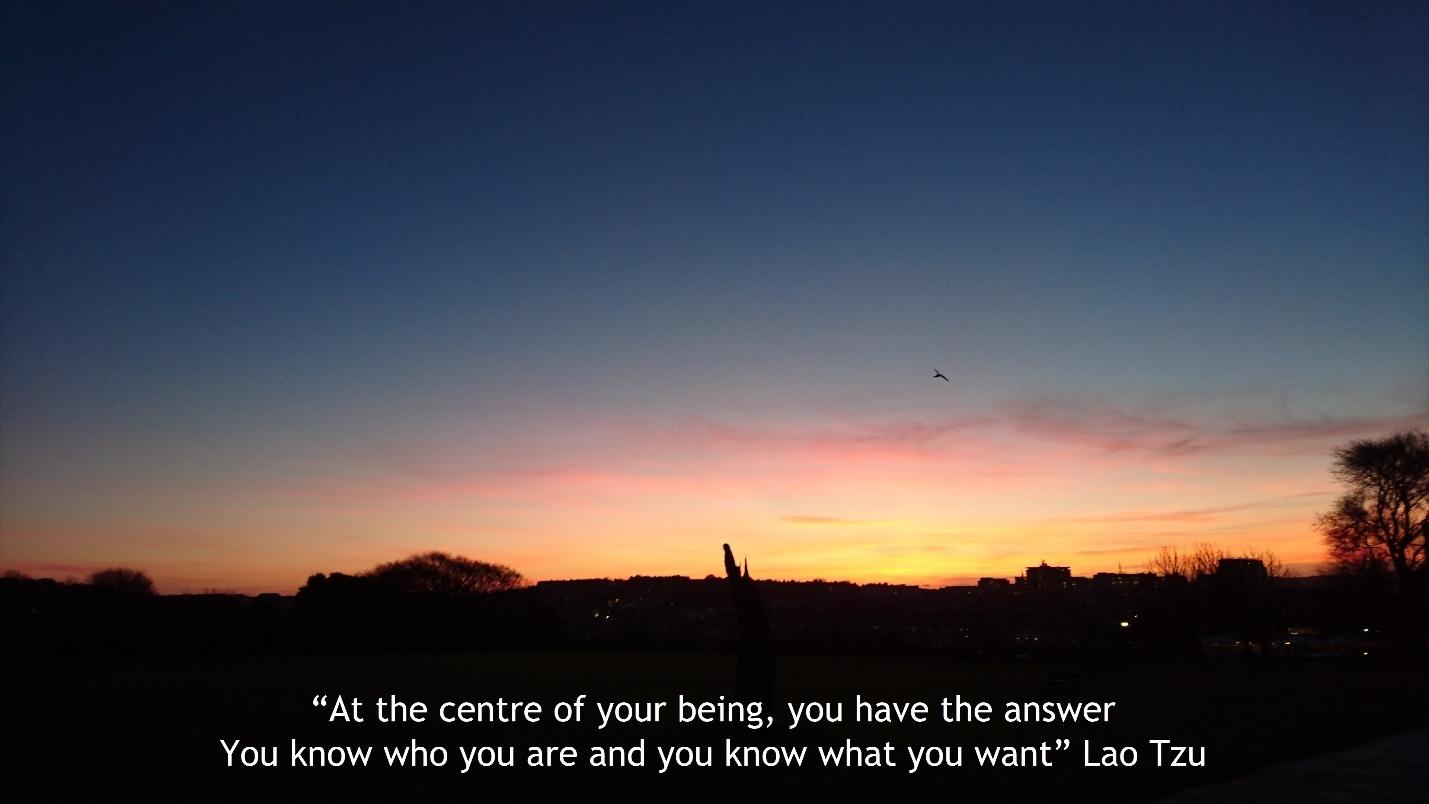
I still remember having conversations with her about world religions and particularly her readings of Krishnamurti and his thinking. She spoke about having an inner voice, a place within us where we have the answers we need if we make the time to listen:

I have found my Liberation and because I have attained that Kingdom of Happiness which dwells within me” Krishnamurti – Ommen Camp Fire Talk 1927

Blessed with the time I spent with my gran after school most days and at weekends, she introduced me to the quietness we have within, to a form of meditation which began for me as that young child sitting quietly, listening to beautiful classical music in silence, then talking about what I had heard and how it made me feel.

Having spent more time meditating in these past few years (see http://kategl.blogspot.co.uk/2015/01/what-is-this-life-day-49.html) I’ve realised that for me this has been the missing link for so many years. I feel different when I don’t make time for those walks or to meditate each day. I notice that I’m not as productive at work, it is harder to stay focused, and as an Executive Coach, harder to be present for my clients if I don’t make time to be still before a session.

Amidst the many other distractions we now have, I have found that time spent out walking, something that most of us are physically capable of doing, or sitting quietly, noticing our breath, is invaluable. And I know I’m not the only one! There is evidence that we make better decisions when we press the pause button for a moment. Business leaders talk about how they meditate or use mindfulness to aid them in making good decisions. Medicine has also recognised the link between our physical and mental health. Have a look at the number of articles that connect depression with irritable bowel syndrome and indeed how meditation has been found to help many sufferers.

In the last ten years or so neuroscience has also proved that we have centres of intelligence in our cardiac (heart) system and enteric (gut) system. With all the same hallmarks of the brain we all refer to in our heads, our heart and gut also have large numbers of neurons and ganglia, neural cells and the functional attributes that include perceiving and assimilating information. Is it any wonder we often feel a bit sluggish after a big meal?! Or hear how people have followed their heart when achieving a goal? We talk about passion in business these days, something I don’t remember when I started my career nearly 30 years ago.

All too often we ignore the wisdom these other brains offer, hence this attempt to encourage you to make a bit of time to be able to hear them. And to suggest that next time you shed tears unexpectedly, consider whether your heart may be trying to tell you something. Or when you take a really deep breath, perhaps your gut is inviting you to listen...

I will always fondly remember those quiet times with my gran, and am guessing that you may well have someone like her in your life, someone who encourages or enables you to be closer to the calmness that is within you. Someone who inspires you with their ability to face up to life’s challenges. Many have already contributed to Kate’s Advent Blogs this year and in previous years.

I hope this will have encouraged you to reflect on who you are and what makes you the person you are today. Please make time to listen in for that inner wisdom. Start with a few minutes each day and allow it to build. Making time each day to sit and breathe or take a walk can deliver powerful results. And when you discover what works for you, do more of it and enjoy exploring that peaceful place, the calm that leads towards your inner wisdom.


Tuesday, 22 April 2014

Happy Thoughts

Recent research at Harvard and also by teams at the University of Warwick has shown that happiness makes people more successful  - even simple acts such as the provision of fresh fruit or chocolates have been proven to enhance employees’ wellbeing and contentment.  Given the amount of chocolate I have enjoyed over the Easter weekend, I should have a very successful few days ahead, even if the eggs were not a gift from my employer.  It is interesting how employee wellbeing is increasingly becoming a topic of note, both within HR circles and in the wider community; I was called by a journalist last week and asked my opinions on current approaches towards increasing employee happiness as a means of combatting stress and enhancing productivity.

 
Increasingly there is evidence that happiness has a positive impact on the bottom line – it seems logical that happy employees are less likely to
  • go off sick (especially with stress-related illnesses),
  • seek new jobs
  • be worn down by the demands of their environment.

Hence costs such as turnover and fees for contract staff to provide temporary support can be influenced or controlled, but there is more compelling evidence that happiness can have a direct impact on financial results. Investment funds, such as the Parnassus Workplace Fund, with portfolios specifically made up of organisations with reputations for treating their employees with respect and those which are seen as “best places to work” in publicly listed surveys, are outperforming the markets by more than 4% per annum.

 
There is scientific evidence that business performance is influenced by individuals’ mind-sets.  For example, resilience has been proven to be a key success factor, especially in retail environments where interaction with the public can be stressful and demanding. When I and a team of researchers assessed the best and least effective cashiers at one of Europe’s top retail banks, it became clear that the ability to re-centre emotionally and hence to approach each encounter afresh (rather than with dread following a difficult customer interaction) was a highly desirable attribute, so much so that we significantly altered the recruitment processes to screen and select for resilience.  Resilience is now seen as an important trait in leadership and required Emotional Intelligence (EI). Data is growing that supports the correlation between EI in leaders and business results – studies undertaken in 1998 by renowned academic McClelland, into the divisional heads of a global food and beverage company, showed that leaders with strong EI competencies outperformed yearly revenue targets by 15-20% and leaders with weak EI under-performed by a similar margin.
 
The resilience of Nature
Burt’s Bees (a business established in Maine in the 1980s, creating candles, and which has grown into a globally recognised provider of personal care products containing beeswax) is an interesting example of a successful concern that has focused on happiness and goodwill to ensure its prosperity.  Given that it refers to its business model as operating for “The Greater Good”, perhaps it should not be surprising that in 2010, when it was decided that the time was right for global expansion, the CEO, John Replogle, made a conscious effort to focus on his employees’ and managers’ wellbeing.  He sent daily emails praising individuals, he reminded managers to talk to their teams about the firm’s values and he brought in an external expert to facilitate a three-hour session on happiness in the middle of the expansion programme. A member of the senior team subsequently commented that Replole’s

"emphasis on fostering positive leadership kept his managers engaged and cohesive as they successfully made the transition to a global company."

In my experience most CEOs and senior leaders tend to increase the pressure on others during big projects and times of change – for example by sending out emails demanding information in very short time scales, making unexpected and changing demands regardless of other business pressures (or else appearing to vanish into a vacuum and not communicating at all as they themselves are distracted by unusual pressures), thereby adding to the stress of their reports and employees. These leadership traits were observed by Daniel Goleman, when researching his EI-Based Theory of Performance.  He noted that the key leadership styles and their impact on others are as below:

Leadership Style
EI Competencies
Impact On Climate
Objective
When Appropriate
Coercive
Drive to achieve; initiative, emotional self-control
Strongly negative
Immediate compliance
In a crisis, to kick-start a turnaround, or with problem employees.
Authoritative
Self-confidence; empathy; change catalyst
Most strongly positive
Mobilize others to follow a vision.
When change requires a new vision, or when a clear direction is needed.
Affiliative
Empathy, building bonds; conflict management
Highly positive
Create harmony
To heal rifts in a team or to motivate during stressful times.
Democratic
Collaboration; team leadership; communication
Highly positive
Build commitment through participation.
To build buy-in or consensus, or to get valuable input from employees.
Pacesetting
Conscientiousness; drive to achieve; initiative
Highly negative
Perform tasks to a high standard.
To get quick results from a highly motivated and competent team.
Coaching
Developing others; empathy; emotional self-awareness
Highly positive
Build strengths for the future.
To help an employee improve performance or develop long-term strengths.

Two traits typically drive the emotional climate within business downward – Coercion and Pacesetting – especially when over-used.  Both of these approaches exacerbate the pressure and stress on others.  Neuroscience is increasingly proving that stress makes people’s brains work in certain ways, for example by reducing their capacity to make rational decisions, especially when trying to perform multiple tasks. Good leaders are beginning to realise the importance of reducing the stress and increasing the wellbeing of their people – with better outcomes for all concerned.
 
Judgement of Paris by Joachim Wtewael, 1615
I wonder if the stress of selecting the most beautiful goddess in chaotic surroundings impacted his judgement
It is possible to help ourselves become happier and to enhance our own wellbeing.  Almost two years ago I attended an excellent conference on Positive Psychology, designed and run by L&D specialist Sukhvinder Pabial – all too often I and others go to an event, find it interesting but then use little of the learning going forwards. However, since Sukh’s session, I have tried every day to list three good things that I have enjoyed over the past 24 hours – I often post these on social media as a public statement of gratitude and to connect with those whom I know who do the same (research shows that the human need for social interaction is powerful and that simple acts of recognition and acknowledgement benefit both the recipient and the person making the statement). 
 
 
I have noticed, as the months have gone by, that I have become more content in myself and the world in which I live. I am making good progress at work too. Success is seldom achieved in isolation and I am truly grateful for the support of others – colleagues, family and friends.
 

A meaningful “Thank you” is good for you and for the person to whom you say it.   In recent years an increasing body of evidence is emerging that proves the link between gratitude and wellbeing.  It takes little effort to say thanks but, in the rush of modern life, it is easy to omit doing so. I challenge you today to say “thank you” – surprise yourself and someone else by doing it!  I am sure that it will make you and them happier and might make you both more productive.
 

I must head off to work now… I might take some chocolate in for colleagues in the office.


Belated Happy Easter!


Wednesday, 5 June 2013

Sweet Rebel

Very occasionally in life you meet someone whom you know is extraordinary, who genuinely has an impact on the world around him or her and can be seen to be making making history, for me, Mott Green was such a man.  Mott was born in 1966 and grew up in New York and Oregon.  His real name was David Friedman and he came from an impressive academic and professional family descended from Russian Jewish immigrants - his father a respected physician, his uncle a genuine rocket scientist, young David was expected to follow in the family tradition of landing a well-paid and respectable job after graduating.  Mott was highly intelligent and could have succeeded in almost any field he chose, he was also a rebel and he found his cause...
Mott fell in love with Grenada and its people, it is where he chose to live, but he is probably best known for being a chocolate anarchist on both the local and global stage.  Much is said in modern business circles about the value of being disruptive, we espouse the value of being “Punk" in approach or “hacking” to amend and enhance the existing system - certainly, innovation and creative solutions require what can feel like significant change.  However, for many this is simply tinkering with the engine and not a from-the-bottom-up redesign.  


By training Mott was an engineer and he seemed almost at his most comfortable building things (from brave concepts to tangible, working objects to achieve his objectives).  He was clearly happiest when challenging convention and bettering the status quo.   Knowing him as I did, I can vouch for his being a passionate visionary with extraordinary drive and tenacity.  His enthusiasm was infectious and he had a wicked sense of humour.  This short video (a trailer for the wonderful film "Nothing Like Chocolate", in which he played a starring role) will give you a taste of the man, his values, extraordinary abilities and achievements: http://vimeo.com/38528342   He had charm which concealed a core of steel, but he also showed immense compassion to those who needed it and invariably stood for what he saw as right, be that :

  • helping a rural farming community;
  • making a stand against discrimination and abuse (including child slave labour);
  • speaking out against the global exploitation that is the model for the majority of the chocolate industry; 
  • taking action against climate change;
  • building an award winning factory with his bare hands;  and 
  • doing more to reduce the carbon footprint of his business than any other entrepreneur I know.  


He was, in every way, inspirational.  He rewrote the rules and enabled value to be added at the source.  He made me laugh, he made me think and over the past couple of days he has made me cry.  He died unexpectedly at the weekend - electrocuted whilst mending some kit (not the in the factory, which is, I am pleased to say, continuing to produce its exceptional chocolate).  I and many others mourn his loss, but we should also celebrate an amazing life.  I know few who could do what he has done and the legacy he has created speaks for itself - it is an inspiration to all who wish to improve the world.  


Nyran taking wet beans out of cocoa pods in Grenada
Mott discovered his love for chocolate as a 15 year old boy, when accompanying his father to Grenada on a visit to the medical school.  Mott became fascinated by the fat pods encasing plump beans; the harvested crop, hulled and separated from the white pulp inside the pods, lying in piles, like russet brown pebbles, to dry in the Caribbean sunshine; the dapple of light through the leaves in the rainforest, where the cocoa plants grew; the pods hanging like Chinese lanterns and the taste of the fresh white pulp that surrounds the beans - sweet with a slight citrus tang (like passion fruit) - the raw beans themselves almost unpleasantly astringent, nothing like the processed chocolate that he knew from New York.


Cocoa pods
He was swift to realise that, although most of the beans are grown in the southern hemisphere, the majority of chocolate producers are located in the northern hemisphere, where there is a lucrative market for the luxury product.  Confectioners and other industrialists bought cocoa (often harvested by child labour), imported it, processed it into chocolate and were able to make a significant mark-up.  Mott noticed first hand the inequalities within the industry. A few years later, on returning to Grenada (have dropped out of university and spending some time in a commune), after living in the rain forrest for a while, he decided to settle on the island.  


The Grenadian rainforest
Inspired by the disparity in the cocoa trade, he dedicated his life to enabling production of world-class chocolate, from bean to bar, in the location where the cocoa grows.  In 1999 Mott founded the Grenada Chocolate Factory, with two friends.  He literally built a chocolate factory, welding pieces and using salvage to make machines based on designs from the 1900's (when there were more small artisanal chocolatiers in Europe), but powered by solar energy, to achieve his dream.  If you wish to know more about how chocolate is produced in a small Grenadian factory, here is the process: http://www.grenadachocolate.com/tour/process1.html

Edmond roasting cocoa beans, Grenada Chocolate Factory
He slept in a small store area of the factory and worked tirelessly to establish the operation on the island.  He encouraged local farmers to join his cooperative, paying them and him the same wage and taught them how to produce world class crops without resorting to harmful pesticides or environmentally damaging fertilisers.   One of the things that made Mott stand out from other cocoa producers and chocolate makers was his determination to be “green”, ethical and fair.  He declined to sign up to Fair Trade, as he felt that the approach of shipping produce to processors in wealthier countries, for them to capitalise on its value was unjust.  Instead he taught the local farmers how to enhance their crops and trained people from the island to produce high calibre chocolate (despite the problems of doing so in such a hot and humid climate).  
  
Kimon moulding chocolate bars, Grenada Chocolate Factory
Last year he took this one stage further and, using the power of the Trade Winds, he brought his bars of chocolate to consumers in Europe on a sailing ship.  This year he arranged to reduce the carbon footprint of his chocolate even further, by having the bars collected off the boat and delivered across Holland by cyclists.  I am so sad knowing that he will not see this dream become a reality when the ship makes land in less than a fortnight  You can read the poignant last post on Mott’s blog: http://mottontresshombres.blogspot.co.uk/?m=1

Mott, standing by the moored Tres Hombres
prior to delivering chocolate by wind power to Europe
His dreams have become a reality, he has made a better world and enhanced life for many (myself included).  We should all take inspiration from him and what he has achieved.  If you have a dream and the willingness to pursue it with tireless determination, it is amazing what can be done.

This wonderful song, co-written by Mott, celebrating the cocoa bean and the ethical production of chocolate, seems to me a fitting epitaph and ending for this post...  Please listen and smile in recognition of a wonderful man.

http://grenadachocolate.com/human%20beans.mp3

Cocoa pods - grown in Grenada and used for making chocolate