Showing posts with label coffee. Show all posts

Monday, 22 January 2018

Home grown - Day 54

Day 54 (Tuesday 23rd January 2018)
54 years ago, on 23rd January 1964, Louis Horst - a pioneer of modern dance died in
America. He started working in the world of dance when he agreed to a 2 week role as
conductor for the Denishawn company in 1915 (he stayed with them for a decade. Whilst
there, in 1916 he played the piano for Martha Graham's 1st dance lesson. A decade later
he accompanied her for her solo debut in New York and a dance and music partnership
was born - he remained her Musical Director until 1948.
Photo: Martha Graham performing to Louis Horst's music in Frontier
Today is my youngest son's birthday, it is also the final day of the Advent Blog series, and what a series it has been. We have read posts about love, hate, birth, death, success, personal awareness, family history, contentment, despair, change, learning, growth, laughter, perceptions, assumptions, tears and determination. I am always amazed at the sense of community and fellowship. It has been a joy acting as curator (I'm the lucky one, I get to read the posts first). Contributors have come from across the globe and their readers have been supportive and genuinely interested in what others have had to say. There have been some extraordinarily open and candid disclosures, about mental health, family deaths, and times of anguish and desperation - I know that these posts have helped others who are struggling, but who have not known how to or wished to speak out themselves. People have sent me messages asking me to thank contributors or simply to state that what they have read has made a difference. Thank you, each of you, for helping to ease the pain and confusion of others or simply for taking the time to create something that so many people have enjoyed reading. 

Today's final post is by Gavan Burden, the founder and owner of Burden Dare. It's great to end on a post that, rather like the Series, is uplifting in parts, touches on some challenging subjects, will make you think, might make you smile and which offers hope for the year to come. Gavan is a lovely man and he is doing his bit to try and make the world a better place. As you will read below, Gavan is actively involved with a central-London charity that assists the homeless and those less fortunate than us. He is an effective and supportive mentor. If you want to know more, you can reach him on Twitter via @burdendare. Gavan lives in Sevenoaks and is a passionate supporter of the local cricket team, Sevenoaks Vine CC, where he chairs the Management Committee and, when asked, still plays for the Old Vines (the Club's over 40's team). 

I hope you have enjoyed this year's series as much as I have. Thank you for being here with me! I hope 2018 proves exceptional for you (in a good way) - I look forward to hearing about it.

********************

Dawn, we see it as the awakening; a new day, with true blue skies, and a new beginning – and, most importantly, it always happens; always has, every day for billions of years.

Lavender Fields at Dawn by Antony Spencer
Did you know there are three types of dawn (four if you include false!) and broadly speaking they are defined by the amount of sunlight in the sky, so what you can see to do in it really. It’s interesting stuff this, it’s so normal isn’t it?
In science the three dawns are when the sun is 18o, 12o and 6o below the horizon, and from darkest to brightest they are: Astronomical (that’s a technical definition, it’s still darkness); Nautical (sailors can see the horizon); and Civil (deemed safe for us people to be out and about, doing things).
Before that there is complete Darkness; it is black, colder and frequently bleak when the sun is more than 18 degrees below the horizon, and that’s when the foxes come out to play. Have you heard them screech?
As I saunter towards the twilight of my own working life and the dawn of retirement (whilst being very grateful for the entrepreneurial opportunities life seems to have constantly offered me – GOYA as the trainers in Lloyds Bank of old said {Get Off Your Donkey}), I have carried out that age-old analysis of sorting out what “my time” will mean.
Last year I wrote about phase 1, the mentoring role I have with a charity working to reduce the cycle of homelessness by helping people into sustainable employment (update later), and this year I thought I’d write about how those foxes have clashed with phase 2, growing my own fruit and veg - except that really wasn’t very interesting.


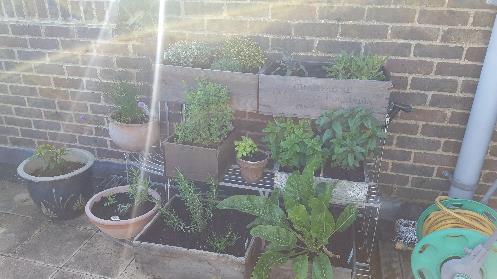
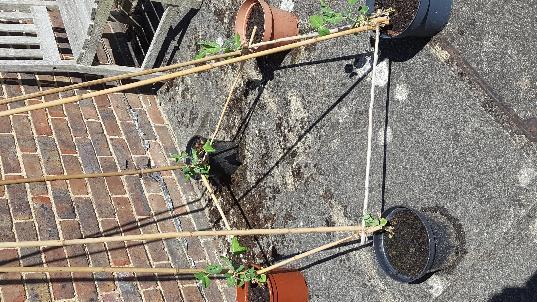
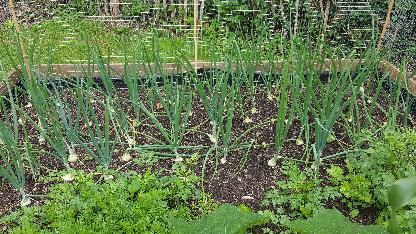
Surprise surprise. The veg grew and tasted really lovely – far better than anything in a supermarket. Chillies, peppers, peas, marrows; beans were running riot; onions-a-plenty; spuds-u-like; strawberries – my word I will never buy any more from a supermarket; “That’s Life” carrots, and as for the tomato sauces and soups, well they were quite extraordinary and still come out of the freezer today. The only surprising thing was that I was surprised it all worked! (editor's comment - Gavan has shared photographic evidence at the end of the post)

Then I got a call.

What if you don’t ever see a dawn?
What if every night is just darkness followed by a befuddled fog?


What if prescribed meds combine with an innocent, but poisonous, cocktail of self-administered supplements to remove every thought from your mind, every hour from your day so that dark becomes light, yet light no longer exists?

This picture of drink and drugs used on the street was taken on 21st January 2018
What if you accidentally use the one treasured possession you have, a mobile phone, as a weapon?
What if you blow all your money, and some, without knowing you are doing it?
Can you imagine that? Can you imagine the chaos, and the conflict in your mind, of how far you have slipped down from the top of the well you thought you had reached?


Welcome to Christmas for some people who have nothing.
I can’t help being astonished at the gulf that now exists between our parallel worlds; and so a New Year’s work begins to try to bring our normal to the world of those who feel, and seem, excluded.
The good news is that I know it can be fixed, given time and thought. And people, people like you and me.


Meanwhile Tom, my mentee from last year, has become a minor celerity: everything he touched turned to “gold”; a poster boy for the charity; he is a hit with his coffee customers; he has hobnobbed with Jeremy Corbyn in Borough Market; he has his picture on a packet of Old Spike coffee on sale in Sainsbury;
he has been on the 6 O’clock news (BBC) and in the Times (twice). He’s on his way now, he reckons he’s now at a Civil dawn; sunrise may well happen this year and then we will have a bright new star.
This never ends, does it?


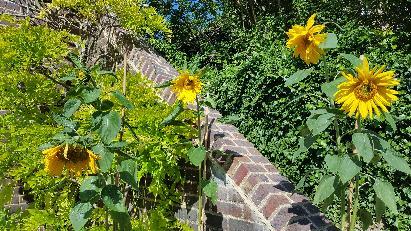
( a few piccies of my veg)


Saturday, 17 August 2013

Roar!!

This post originally appeared on the Discuss HR blog for the LinkedIn Group Human Resources UK

  http://discusshr.blogspot.co.uk/2013/08/roar.html?goback=%2Enmp_*1_*1_*1_*1_*1_*1_*1_*1_*1_*1%2Egmp_58949%2Egde_58949_member_265136563#%21


There were some excellent comments


Roar!!

Meeting for coffee dates back to 14th century Turkey and coffee houses remain a cultural hub for people around the world.  The coffee house concept was first brought to London in 1652 by Pasqua Roseé, an eccentric Greek who had worked in Turkey.  By the early 18th century London had over 3000 coffee houses.  They are not to be confused with the Starbucks and Caffè Neros of today – the coffee was dark and almost unpalatable and the conduct of patrons greatly differs from us, who now sit in solitary silence sipping our Lattes.  You were expected to talk and debate.  Button’s coffeehouse (located 300 years ago in the site of the current Starbucks on Russell Street near Covent Garden) is a good example – it was frequented by playwrights, poets, thinkers and journalists.  It was customary for a stranger to sit himself beside you and immediately demand your opinion on the news or place the text of a novel before you and seek your criticism and comments.  Button’s was famous for the head of a roaring lion affixed to its wall – the public were encouraged to feed the open mouth this statue with letters, tales and testaments; the most appealing of the lion’s weekly diet were published in Joseph Addison’s Guardian newspaper, under the heading “the roarings of the lion”.

18th Century Coffee house - courtesy of British Museum
It was apt that I started last Friday with a cup of coffee, when invited to have a discussion about HR and its role going forwards with Peter Cheese at the CIPD.  Peter joined the CIPD in July last year as Chief Executive, following a successful career in Accenture, which culminated in a seven year stint as Global Managing Director leading the Talent and Organisational Performance Consulting Practice and three years as a senior consultant with various non-executive roles, including Chairman of the Institute of Leadership and Management (where he has continued as a Board member).  I was joined by a couple of inspirational leaders from the HR community - both exceptional bloggers who are not shy in stating their opinions (see http://flipchartfairytales.wordpress.com/ and http://adjusteddevelopment.wordpress.com/).   


I must confess to not being a member of the CIPD – despite having spoken at a number of Institute conferences and being invited to various events over the years, for which I am very grateful.  I have never seen the need to belong.  I did not require the qualification to succeed in my job – I was one of the fortunate few to experience the excellent two year modular HR leadership development programme devised by Lloyds TSB, in conjunction with Roffey Park, which covered much more than the CIPD curriculum did at the time – I can understand a balance sheet, spot anomalies in data and am comfortable being consultative, questioning business approaches and testing strategic plans.  Perhaps I was at ease challenging members of the executive team because I am a “quarrelsome lawyer” who has crossed into HR from a commercial role and was already known as a business leader.  For me, the CIPD seemed to have little to offer, indeed I found it frustrating how tied it was into the production of “best practice” policies and procedures, rather than encouraging its members to get under the bonnet and really understand the drivers for their organisation and its people.  I have always believed that HR’s role is to enhance the lives of workers and through them to enable the achievement of desired outputs for the organisations in which they are based.


We had a robust discussion about the role of HR and hence the purpose of the CIPD.  Peter is passionate about people and what makes them work.  Being an ex-consultant, he looks at business from a number of angles and is mindful of the need to have strong foundations on which to build for the future; it is no surprise that Peter is a European Board Director with Junior Achievement Young Enterprise Europe (which focuses on the encouragement of financial, entrepreneurial  skills that enhance employability in young people through business involvement in universities and schools).  He also sits on the Council of City & Guilds  and is an Executive Fellow at the London Business School, with close links to the faculties of Organisational Behaviour and Strategic Management.  He has not come from the conventional ranks of HR and he brings a fresh pair of eyes and a commercial but compassionate mind.

Peter sees a broad role for HR that can ensure that the function adds value.  Currently, in many organisations, HR practitioners concentrate on only a small part of the overall requirements of the function.  Cost-cutting and dogmatic espousing of “The Ulrich Model” to the exclusion of all else has not helped.  I think Peter is right, to add value, HR needs to think “in the round” – how can a person expect to talk with authority unless they are:

·         aware of the context in which a business operates (economic, social, political, environmental, etc...);

·         appreciate the underlying drivers of people (psychology, cultural impacts, behavioural traits, neuroscience, etc...);

·         understand the business in which they are based, its strengths, weaknesses, competitors, opportunities and planned future direction; and

·         can devise approaches that will encourage optimum performance and instil job satisfaction and genuine appreciation of worth in the workforce and those with whom they interact.

However, there is more that is needed.  HR is often its own worst enemy – people in HR devise their award winning policies and procedures, often copying what is perceived as best of breed, without giving due consideration to the business that they are supposed to be supporting.  Frustrated employees and individuals vent their anger in blogs on the subject and apocryphal stories abound illustrating what I mean   (http://www.timsackett.com/2013/08/09/reason-2763-people-hate-hr/ )  We people working in HR  need to stand back and consider our role in a business and what we can do to add value.  I am not saying that there is not a place for good policies and procedures – we all benefit from appropriate structures and knowing what is expected of us – but HR is best placed to view what’s going on across the whole business, to hear things from employees at all levels, to have access to data that can be applied to enhance understanding where there are issues and to make proposals as to how to improve things.

Many in HR need to change their attitude and start to roar.  


We must join the debate, challenge when we see that things that could or should be done better or that would be more effective if approached in a different way.  The time has come for HR to start leading by example, rather than sitting back, observing the business and waiting to be told what to do.  Being a “support” function, HR usually sees its place as being subservient to those who are client-facing or who make the products.  However, HR has the knowledge and insight to make a real difference and that opportunity will be lost if we won’t join the debate.  As Edward de Bono says in his book Think:

“provocation provides a means by which you can unsettle your mind in order to increase the chance of having a new idea.” 

In a world of almost constant change, new ideas are needed.  When will HR be capable of synthesising and provoking ourselves and others to enhance the world of work?  How can the CIPD best help our industry?


I have placed my comments in the lion’s mouth, now let’s hear yours...