Thursday, 31 October 2013

Be Fruitful

Last week I found myself as Key Note speaker at the Financial Services HR Leaders’ Strategy Meeting 2013 in London - a first for me, as having damaged my hip, I had to speak to whilst sitting down.  I hope people didn't think I was being rude.  I am indebted to a fellow Human Resources Director, who unexpectedly had to pull out of the conference, not only for the opportunity but also for his title: What does “strengthen your core, innovate your business” mean for HR in Financial Services?  Given that today is Halloween, a day on which apple bobbing is a traditional pastime, I thought I’d swiftly share with you the points I covered in my talk, many of which centred on fruit and fruitful approaches.

As you know, I firmly believe that you reap what you sow.  When I was at school, there was a girl in my class called Sarah.  For some reason, Sarah really irritated one member of staff and I remember this teacher yelling at Sarah
“You are rotten, rotten to the core.” 


This is a shocking thing to shout at anyone, but potentially a devastating statement for a young girl hitting puberty.  Sarah was shocked and hurt and spent much time mulling the phrase over.  Eventually she decided that, if she was already a lost cause there was little point in trying to be an obedient and studious pupil.  Sarah became a rebel and, to my mind, her decision can be traced back to the expectations expressed of her and they way that she was spoken to.  Admittedly, there are occasions when telling an individual that they are potentially doomed to be a failure can drive their behaviour the other way.  My father’s office was next that of the father of a boy who was seen as different, a troublesome handful at school.  His headmaster told him that

“You will either go to prison or become a millionaire”

The father was so exasperated by his son’s conduct that it fell to family friends, such as my father, to give the lad funds to establish a small magazine (initially a school publication) that grew into a national student magazine with interviews with Mick Jagger and John Lennon, and which was the first entrepreneurial success for young Richard Branson.  Some people need a challenge to spur them on.  Much depends on how you react to the way you are perceived by others.


As Marcellus famously says to Horatio in Hamlet, there is

“Something rotten in the state of Denmark”

And one could claim a similar opinion towards the state of Banking.  Certainly, Financial Services as a whole have not been well perceived since the Financial Markets crisis of 2007-2009 and it is not hard to see why.  The wasp-like Media has feasted on a glut of issues, including:

  1.  UBS being accused of concealing assets
  2.  RBS, HSBC, Standard Chartered and others allegedly involved in money laundering
  3.  J.P. Morgan Chase - $7 Billion trading mishap and more recent problems
  4.  Barclays settles re Libor rate rigging
  5.  Anglo Irish Bank directors recorded planning to deceive regulators
  6.  ING named for aiding illicit Iranian and Cuban transactions
  7.  Capital One accused of deceiving customers
  8.  Occupy Wall Street
  9.  Mis-selling of insurance by retail banks & credit card providers
  10. 80% of the world’s 26 banking and finance unions have cited stress as a major problem for their members – UNI survey 16 Oct 2013
  11. Huge pressure on staff - since 2008 the big 4 banks have cut around 180,000 jobs 

              
Financial Services’ reputation has been badly damaged, as Casio says to Iago in Othello:

“Oh I have lost my reputation I have lost the immortal part of myself and what remains is bestial.”

The only thing that can restore the institutions’ reputations and the trust of their customers and clients is the conduct of the people who work within them.  People working in Financial Services must do what is right.  As Douglas Adams once said:

“To give real service you must add something which cannot be bought or measured with money, and that is sincerity and integrity.”

HR’s area of expertise is people and hence now is the time when HR should shine.


To be taken seriously, HR needs to prove itself to be commercially astute and have the strength to stand up for what is right and in the long-term, sustainable interests of the industry, as opposed to caving in to short-term greed and personal gain.  I have mentioned before the situation with the pear orchards in Sichuan where it was believed that a greater commercial harvest could be reaped by eliminating insects that damaged the fruit.  Powerful insecticides were utilised that destroyed all insects – now, due to the lack of pollinators, men have to climb the trees and pollinate the blossom by hand.  HR needs to speak out and address the shortcomings in strategic plans and proposed behaviours.


HR needs to be brave and when necessary make the hard decisions – all orchards are enhanced by judicious pruning.


There is much to be said for focusing on core business activities when times are tough.  Some topical examples include:

  • Twitter, which is concentrating on its mobile offering going forward as that is where it anticipates most customer usage in the years ahead
  • Burberry which has turned itself around by strengthening its core retail offering thereby producing 17% growth – it as also interesting to note that Apple launched its latest handset on the Burberry catwalk – an indication perhaps of closer connections to come.


Apple, of course, has traditionally been hailed for its focus on innovation. Collaboration and Innovation are two key buzzwords being used to explain the anticipated success of leading businesses going forwards.  When done well, innovation can be the key to success much like the appeal of the unusual citrus tree below (clever grafting has enabled grapefruit, oranges, limes, lemons and clementines to be harvested simultaneously).


But you need to take care not to overdo it.  This apple tree has 250 varieties of apple but the man who created it can no longer name or remember each type without assistance.


Over the past year I have worked hard with fellow executives to introduce some innovative approaches and roles within my own employer.  We know and are proud of the fact that we provide a unique offering for our clients based on understanding and trust.  HR has earned its place and has a voice that is listened to when considering our strategic direction and drivers for success.  I urge you to look at your offering and business model, truly understand what your clients value and work to ensure, through relationships based on integrity, that both you and they can thrive.  It is HR’s role to ensure that the businesses we work for and the employees within them are well organised, flourishing and fruitful.  Like the honeybee, HR can bring a little sweetness to the world.

Fruit trees at Highgrove House


Saturday, 26 October 2013

Frail Strands

“...the strands that connect us are frail, so don’t hang great weights on slender wires...” - John Geddes, A Familiar Rain

This time a week ago I was sitting in a wheelchair in Accident & Emergency, waiting for doctors to determine how much damage I had done to myself in a car accident.  Like many, I was not in the habit of wearing a seat belt in the back of a London Black Cab (London traffic is so slow - what’s the point?  The rear of a traditional taxi feels like a secure bubble of safety away from the bustle outside, so it is easy not to appreciate the need to belt up.  Most of my friends don’t bother...)  Let me be a lesson to you.  I learned the hard way, after an ignominious period spent trapped, with my nose pressed to the floor of the cab, unable to lift myself as I had lost the use of my legs - I did find some forgotten objects under the front seat, including a large grey cash box and some spare change, but that was small consolation to either the driver or myself.  The cabby was brilliant, once we had realised that I was in no state to make the meeting I was en route to attend, he bought me some water (I was in shock and felt sick), he drove me to hospital (ironically one of the ones where I am a Governor), he found the wheelchair and wheeled me to A&E, he would have stayed with me too if my son had not come to be with me.  With hindsight, there was much value to being a “mystery shopper” in the hospital; I can honestly say, with one exception, I was enormously impressed by the attitude and care shown to me and to other patients by all the staff I met.


I spent a while in “Triage”, the area where the severity of each patient’s condition is determined, so that treatment can be prioritised (demands on the UK health service are such that not everyone can be treated immediately).  


Triage as a concept commenced during the Napoleonic Wars (the word comes from the French trier - to separate or sift) and French doctors used the approach in World War I, dividing casualties into:
  • Those who will probably live, regardless of what care they receive
  • Those who will probably die, regardless of what care they receive
  • Those for whom swift care might make a positive difference.


In corporates we often apply a similar approach to people and their performance.  We focus on the employees who are not perfect and see if we can make them better.  There are many articles exposing the fact that managers usually concentrate their efforts on individuals who make the most noise and those who demand immediate attention, as well as on the people where they feel that it is possible to produce a positive outcome for all parties.  We usually ignore the good performers, presuming that, because they are doing what is asked of them, they are happy.


I think most businesses would benefit from spending a bit longer considering how they treat their good performers, especially when they are allowing others to get away with sub-standard work and attitudes.  Increasingly I am of the opinion that it is crucial for organisations to think more about the impact that their demands have on those they value and the others in their teams.  It is common practice in most organisations for managers to rely on a chosen few, who have proven themselves capable of producing good work, even ignoring others who might also be good performers, because there is a degree of comfort in asking someone to do something and knowing that the task will be done on time and to the standard required.  The people being overlooked often complain that they are not developing required skills and hence are being denied career progression, but we seldom think of the impact our continuous demands have on the few doing the work.


People are frail and it is easier to hurt them than you might think.  Employers would do well to realise that it only takes one final small thing to change an individual’s attitude from being flattered that they are relied upon to feeling overwhelmed by their bosses’ demands and becoming disgruntled, believing that everything is dumped on them, when they can see others around them not under similar pressure.  What was once acceptable is no longer OK.  Nobody likes to feel that they are being taken advantage of.  

“Organisations need talented people a lot more than talented people need organisations.” - Dan Pink, said at the HR Tech Europe Conference in Amsterdam last week

Engagement Surveys seldom offer sufficient granularity for managers to know whether their best performers are inspired by their work or disengaged (I am only aware of one piece of recent research that looked at the link between individual performance and employee engagement - Leadership IQ’s survey released in April 2013 - rather worryingly, it showed that in 42% of the companies studied low performers were more engaged than medium or high performers https://www.leadershipiq.com/new-engagement-survey-metric-uncovers-more-risk-for-employers-who-want-to-keep-their-top-performers-according-to-leadership-iq/).  If a company MD or CEO was told that the firm’s top clients were unhappy and planning to take their business elsewhere, as a matter of urgency, they would go and talk with them to sort matters out, as they are too valuable to lose.  Leaders need to make a similar effort to speak with and provide an environment that will retain top employees.  Over the years I have chatted with rising stars in a wide variety of organisations and many have told me that they do not aspire to the life they see others higher up the tree experiencing.  Long hours, lengthy periods away from family and loved ones, little consideration from the top downwards and not even a “thank you” for the sacrifices made - it’s no wonder that rising stars find a “toxic” culture unappealing.  An environment that forces top performing employees to have to choose between having a life or a successful career will not encourage those following in their footsteps to wish to stay.   Increasingly people, especially the good ones, have a choice. 


It is a human reaction, when confronted with a tight deadline to turn to a reliable high performing employee in the team for support.  However, this can become a dangerous dependency, which results in the top performer being put under unnecessary, repetitive stress, leading to disengagement and potential burn out.  Employers need to break the cycle that constantly puts pressure on star performers.  In our incessantly demanding, technologically connected world, it is unrealistic, as well as inconsiderate, to expect a few always to work excessive hours and to be on constant call.  What is required is a sustainable approach, one that ensures long term success instead of short term delivery.  This was highlighted in the Towers Watson research of November 2012 http://blogs.hbr.org/2012/11/creating-sustainable-employee/ 


The success route to ensuring retention of star employees is outstanding management from authentic and empathetically intelligent leaders.  It is usually the little, irritating day-to-day factors that make a person want to leave a company (and top of this list is poor and inconsiderate management); in the same way it is the small things that can make all the difference and encourage a person to stay.  A genuine thank you, indicating that you really understand an individual and what they have done (perhaps refer to what you know they have missed outside work to help you) - it shows how well you know them and what makes them tick.  You could suggest, before they ask, that they come in late on the morning that their child is performing in the school assembly, as a gesture to make up for the extra hours they have put in, or offer them an afternoon off or early departure, so that they can go to a gig or see a show.  Can you arrange for them to meet someone whom they respect and admire?  A get well card, phone call or flowers when they are off sick is a nice personal touch which shows you care.  Let them know that you are aware of the hours they put in.  Discuss their work load and seek their suggestions as to whom they think could benefit from learning to do certain tasks, so that the workload is better shared and the team can operate more as a unit.


As I know to my own cost, I tore the ligament in my left hip in the accident last Friday, people are fragile, but a little care goes a long way towards making things feel better.


Monday, 21 October 2013

Time Gentlemen Please

I’ve had a very busy fortnight and at times wished I owned a Time-Turner, like the one used by the character Hermione Granger in “Harry Potter and the Prisoner of Azkaban”, it would have enabled me to be in two places at once.  As it was, between Thursday and Monday last weekend, I drove over 1,000 miles, went to an uplifting concert, escorted my mother to hospital for a significant operation, produced meals for my sisters and aunt, drove across England, (collecting my father en route) to attend a splendid dinner in Cambridge in celebration of 30 years since my matriculation, chatted with precious friends until 3.00 am, breakfasted with old Hong Kong hands who remembered my father from when he was Attorney General, dashed to London for lunch with my in-laws and then drove my youngest son back to his school, before continuing on to Somerset to resume my nursing duties.  At every stage I was reminded of how precious time is and the importance of relishing each moment.

Dinner for the Matriculants of '83
Queens' College Cambridge
Certain seconds stand out like gems on a tiara:


Cambridge Lovers' Knot Tiara
owned by UK Royal Family
  • the look in my mother’s eye as she waited, afraid, on the trolley before being given anaesthetic and wheeled into theatre; 
  • the feisty glint that returned when, back in the ward, her consultant came to tell her how pleased he was with the operation’s outcome; 
  • sitting beside her bed, each of us using an ear bud, listening to the illicit recording of The Sixteen that I had made while we heard them perform in Wells Cathedral the night before she was admitted to hospital (I also bought the CD but had insufficient time to upload it, so I am sure I’ll be excused - their sublime singing kept two women calm) - her grandsons would have been proud of her - not only was she listening to music, but also she was embracing technology (a first for her), reading the first chapter of Wolf Hall on a screen;
  • my father’s laughter as he and I struggled to close his case before commencing our drive;
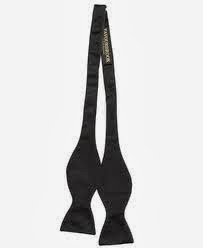
  • tying his bow tie for him as it was proving troublesome - it was the tie he had worn at Cambridge when he was a student, a symbolic item in so many ways - my father lived abroad when I was a student and my parents’ marriage was becoming irreparably broken at the time, so he did not share my student days with me and, although he has memories of attending a graduation ceremony which he believes was mine, it was that of my step sister Jemima - “tying the knot”, so to speak, forged a symbolic bond between us;
  • thirty years late, it was magical to share something with a very special man.  We had lunch at Fitzbillies (just a cake shop when each of us were students), walked together to Queens’  - my college is a coffer full of architectural gems including a true Tudor long gallery, where we had drinks with the President and members of the college; we crossed the Mathematical Bridge hand-in-hand and we both enjoyed chatting with my contemporaries over dinner in the William Morris restored Medieval Hall;
  • seeing Daddy, his face alight with pleasure, sharing memories with people who knew and love Hong Kong;
  • the glow of love in my mother-in-law’s face as she watched the four men she adores most in the world having lunch with her; 
  • seeing the same look on my mother’s face the following day when surrounded by her daughters and sister; and
  • the lip-licking anticipation and sighs of satisfaction when my bottomless-pit-of-a-hungry-schoolboy son shared a delectable Chinese meal with me and the grin he gave when we finished. 

The above list are all personal moments special to me.  I have no doubt that you too have memorable instances that stand out from the past week or year.  The thing that struck me most was how important it is to appreciate the “now” when we have it, rather than worrying about what is to come or fretting about the past.  That brings me to the kernel of this post - the value of effective time management - both at work and at home.


Research has shown that the average person at work gets one interruption every eight minutes, which is circa seven an hour, equalling 50-60 per day.  Most interruptions last five minutes, so it follows that a typical person spends half their working day responding to interruptions.  It is also worth noting that 44% of interruptions are claimed to be self-created by the person whose work is being interrupted.  When asked people have admitted that 3/4 of the interruptions they respond to are of little significance, so most of us waste three hours each working day on stuff that is of little value (http://interruptions.net/literature/CubeSmart-productivity-wp1.pdf).  In addition, it usually takes a person on average 23 minutes to become as immersed in a matter as they were prior to the interruption.  That’s a lot of wasted time every day.  There are no simple solutions, other than being more self disciplined and removing distractions when you really need to focus (time to turn off Twitter, email, texts and the phone with all its addictive apps - I wonder how many human hours have been spent on Candy Crush).


One trick that might help free up some time is enhancing your reading rate.  The average reading speed is circa 200 words per minute.  The typical working person reads for two hours per day.  Speed reading courses can improve an individual’s reading rate to 400 words per minute - that could find you an extra hour per day.  However, we don’t make things easy for ourselves - research has demonstrated that 100 characters per line is the ideal length for on-line speed reading, but that is not what people like to have on their screen.  Despite reading longer lines lengths (100 characters per line) faster, people prefer short or medium line lengths (45 to 72 characters per line).


Perhaps the best approach is simply to ensure that we enjoy what we are doing and hence  are less likely to look for ways to distract ourselves from the task in hand.  When an action is meaningful (such as putting surgical stockings on elderly legs prior to an operation) it is no longer a trial nor a chore; the reasons behind doing something menial or tedious give that task value and purpose and there is a huge sense of satisfaction when it is achieved.  As I know from some of the occurrences in my eventful week, there is little better than having a good laugh - the surgical stockings reduced both my mother and I to tears as we struggled to get them on to her frail legs - fitting a camel through the eye of a needle seemed like an easy job compared to getting teal blue compression stockings over her ankles and up to her knees.  Laughter is proven to lower levels of stress hormones and strengthen the immune system.  Perhaps that’s why compression socks are tricky...its hard not to laugh when struggling with them.  Six-year-olds laugh an average of 300 times a day.  Adults only laugh 15 to 100 times a day.  How sad that the majority of us lose a habit that clearly is beneficial.  By openly enjoying what we do and sharing that pleasure with others, we could make work and our broader lives an even better experience.  Treasure what you have, while you have it, as Van Morrison sings in the following song, “Precious Time is slipping away.”


Sunday, 29 September 2013

Intimidation

I was ten, when in September 1973 two stations in central London were targeted by terrorist bombers, injuring 13 people and bringing chaos and fear to the capital.  http://news.bbc.co.uk/onthisday/hi/dates/stories/september/10/newsid_2504000/2504619.stm I lived with my parents and two small sisters in a leafy South West London suburb  - an idyllic and privileged location and upbringing.  My father was a talented lawyer and recently appointed Recorder (meaning that he was expected to sit as a judge for 3-6 weeks of the year).  It was in his legal capacity that he found himself overseeing trials of terrorist suspects and as a consequence his name was placed on that of potential targets.


On a balmy autumn evening in September ’73 my parents and I were sitting having supper with our recently arrived au pair.  My mother had suffered a very difficult birth (requiring significant surgery) for the arrival of my youngest sister, born in March, and hence an extra pair of hands were useful in looking after the family and home.  We talked about the horrors that were besetting London and other parts of the UK and Ireland and, almost as an aside, my father told us to be careful.  Little did we know how prophetic his words would be...


The following day, when he had gone to work and my mother was out shopping the telephone rang.  As the au pair’s English was still embryonic, I answered it.

“There’s a bomb in your house, you’ve five minutes to get out.”

The words chilled me and I tried to get the caller to explain, but they simply repeated the statement and then hung up.  I ran up the stairs shouting a warning and lifted my 6 month old sister from her cot.  With her in my arms and tears streaming down my cheeks I ran to the sitting room, where my three your old sister and the au pair were watching Play School on TV.

BBC's Play School
My middle sister's favourite
“Get out of the house, get out of the house, there’s a bomb.” I kept crying.

The au pair thought I was joking - a game prompted by the supper-time discussion with my parents the previous evening. It was only when I stood screaming at her to leave the house, while I cried uncontrollably, the baby in my arms, outside on the lawn, that she realised I was serious.  I lead her and my sister to my aunt’s house and it was from there that the police were called.  My mother returned to find the abandoned house being examined by bomb disposal experts.  I was never informed as to what happened thereafter.  I can only presume that the call was a hoax.  How cruel to terrorise a ten year old with such a horrific statement - my voice was clearly that of a child.


The experience had a fundamental impact on me.  I learned from that day that people are not always precious nor respected by others and that age is not a factor in how others will behave.  An adult can be less responsible than a ten year old and certainly more unkind.


I mentor a wonderful schoolgirl in Kenya called Catherine.  She goes to school in Nairobi and, since the storming of the Westgate shopping centre a week ago, with the resultant devastating deaths and destruction, my heart has gone out to her and the people of Kenya.  I do not claim to be a theologist, but I have read the Quran and I cannot find passages within it that condone indiscriminate slaughter, especially the killing of children.  It was an undeniable fact that the shopping mall on a Saturday would be full of children out with their parents and friends - there aren’t many other family-friendly and universally enticing places to go.  Over the past twenty years Kenya has progressed from a place where only basic goods were available to a consumer’s delight, but this development is limited and so people tend to congregate in certain locations at the weekends.  In the malls it is possible to buy the latest products that you would expect to find in America, Europe or affluent Asia and therein lies part of the problem.  I suspect the real issue is a clash of cultures and a reaction against rapid change and the imbalances between communities across the continent.  Kenya is one of Africa’s fastest developing economies with a burgeoning middle class.  Much of Sub-Saharan Africa is still almost medieval in the way its societies are structured and people behave - feudal tribes and groups compete for power and territory, with local rather than central control.  Countries such as the Congo, Somalia and South Sudan are dominated by men with guns who extort, rape and terrorise with little to stop them.   I have been told that after nearly 20 years of fighting to run Somalia, the Shabab had finally decided that their dream was impossible and hence were turning to more extremist measures.   What is perhaps most alarming is the manner in which the attack was carried out - not a simple, single bomb but a ruthless group of individuals determined to kill, who actually seemed to target the young and most defenceless. 


Parallels can be drawn to bullying within workplaces and organisations.  Once co-ordinated groups start operating together, to hurt and marginalise a particular individual or set of people, the impact can be devastating.  Cyber bullying has been in the headlines for much of the past few months - the focused, ruthless action of a few destroying the lives of their victims, but similar behaviour can also occur in the physical environment at work.  I have in the past joined organisations where a long-standing group of employees, who were close friends and who had been in their roles for many years, turned on the new hires who were bringing fresh ideas and enhanced approaches - partially because they were afraid of change and a destruction of the status quo.  Often there is a ring-leader who is able to encourage others into behaving in an unsuitable manner.  They know where their victims are to be found and will usually try to hurt and deter them without drawing attention to themselves.  Clearly, these people are not armed with guns and resorting to indiscriminate killing, but even so their behaviour can destroy others’ lives. It is up to all of us to remain watchful and to react when something does not look or feel quite right.  Much better to raise the alarm, even if later to discover that it is a false concern, than not to react at all and for something awful to occur.


Walking out of my house, forty years ago, with my infant sister in my arms and tears running down my face, helped to set my moral compass.  I will always stand against terror in its many forms - life’s too precious not to.  Please join me. 


Monday, 16 September 2013

Three Men in a Boat having a Cracking Time

What an odd language English is - “career” can describe when a person has been in an occupation for a significant period, during which time they have had opportunities to develop and progress, focusing on a vocational direction and enjoying a sense of purpose at work; “career” can also refer to something that swerves in an uncontrolled manner.  I know various people in high profile roles, some of whom claim to have got there through focus and dedication, whilst others have confess to having simply accepted opportunities as/when they have arisen.  Of course, one could argue that favourable circumstances would not arise unless an individual deserved them and hence perhaps subconsciously our careers are more under control than we believe them to be.  I suspect that part of the trick is being able to spot an opportunity when it presents itself, as well as knowing the direction in which you wish to go.  This short clip sort of demonstrates what I mean...


Anther peculiar English phrase is “cracking up” - it can be used to signify an individual’s collapse under severe pressure,  
Extraordinary body painting by artist
Johannes Stoetter
but “cracking up” is also used to describe a person succumbing to humour by laughing, almost to the point of crying, and being unable to stop themselves from doing so.  


However, if the joke that is promised proves not to be all that it’s “cracked up to be”, it is unlikely that they will laugh at all.  Fragmented narratives and missing punch-lines (due to cracked delivery?) can quite ruin a good story.  Did you know that “crack” comes from the Middle English “crak” meaning an enthusiastic, loud conversation (that is often boastful) - hence the expression “What’s the Crack?”, meaning "what’s the news or gossip?".  Which brings me to the point of this post -  I want to spread the word about an extraordinary venture that is underway as I type...
 
An Englishman, a Dutchman and a Brazilian are in a boat with a hole in it, rowing the second longest river on Earth – sounds like the start to a bad joke, but this is a much more enthralling story.  I first met Dr Mark de Rond when he presented to some of my firm’s global top talent at a bespoke leadership development programme, run with the Judge Business School, at Cambridge.  Mark is a social anthropologist and performance specialist with expert knowledge in the fields of teamsmanship, high achievement, collaboration and inter-dependence.  He believes in physically living with his research subjects (groups of exceptional people including elite rowers and combat surgeons).  Mark teamed up with Anton Wright, Head Coach and Boatman for Clare College, Cambridge and Coach for the University Lightweights.  Initially both men thought that the simple venture of rowing together down the Amazon (which in itself would be a world record making first) would be a personally enlightening experience, teaching them both about how they respond to and interact with another human when there is nobody else on whom to depend for a number of weeks.  They also knew that the row would provide them each with a significant period for self-reflection.
However, the adventure to date has given them much more to contemplate and proved that they possess skills, hidden depths and personal reserves beyond those they were anticipating needing.  The record attempt has been fraught with frustrations:
  • Peruvian customs impounded the boat for almost a month – thereby delaying the start of the row.  Mark and Anton are due back in Cambridge to resume their “day jobs” and hence delay is potentially a disaster;

  • the shipping agent filed incorrect documentation, thus risking the food and medication for the trip being impounded;

  • the boat was protected during its voyage from the UK by old car tyres (for which there was no import approval) this nearly resulted in the trip having to be cancelled;

  • with time running out, Mark and Anton had to locate an additional crew member, without whom there would be no hope of achieving the record in the remaining time available.  The crew now includes Murilo Reis – whom Mark has described as mentally tough, unafraid and experienced.  Murilo is a warrior and a passionate environmentalist, owner of a jungle reserve, who loves and understands the Amazon region.  There are many benefits to having a local, Spanish-speaking member of the crew – Other than for the fact that Mark and Anton did not know him a month ago, I am mildly surprised that he wasn’t part of the initial plan;

  • Mark and Anton had a 6 week timetable – 9 days to get to the border (now to be achieved in 5), 16 days to reach Manaus (now reduced to 10) and instead of 18 days only 15 to cover the final stretch – only time will tell if this is possible; and

  • the boat was damaged whist in storage and, despite attempts to mend it, resulting in further delays, the men are now rowing a leaking vessel and they have many miles to go.

The manner in which they responded to each new challenge is a case study in resilience, endurance, prioritisation, dedication, the importance of remaining out-come focused and responsive planning.  At times each member of the team has supported and enabled the others to succeed and thrive.  They are very different men, but their strength lies in their diversity and united determination.  We in business would do well to learn from the manner in which they have coped, effectively overcoming the hurdles confronting them.  

They have made a great start.  The best site on which to follow the journey is Voyage Manager (who have provided the tracking equipment for the expedition): 

http://www.voyagemanager.com/Explorer/Row_The_Amazon_2013/Row_The_Amazon_2013.aspx

It is fascinating watching the progress of the little boat through the sinuous paths of the Amazon - you can tell how wet the region is as, at times, the craft seems to be ploughing through land towards its destination.  Some of the Twitter updates are magical - this morning (still darkest night for them) the boat was surrounded by a pod of pink dolphins, swimming in escort under a sky of uncountable stars. 


I urge you to follow the adventure.  There are fantastic tweets on Twitter via @RowtheAmazon and a great website with an entertaining blog. http://www.rowtheamazon.com/index.html#blog

I am learning much about myself simply through my reactions to their voyage and there is no doubt that all three men will gain a considerable amount from the adventure, as will Leonard Cheshire Disability (the charity for whom they are rowing).  It is seldom that members of the public can witness a unique piece of anthropological research and actually participate (if even only to a small extent) by providing support and contact from the rest of the world.  I know that the crew would appreciate hearing from you either through tweets or by comments on their blog.


It is an amazing story and all I can say to them is “crack on and not just for the sake of your careers”.

Tuesday, 10 September 2013

Sounds Familiar

“God chooses our family, thank God we choose our friends” - or so the saying goes.  I spent the week before last in Wales, with my sons and husband, visiting my father and his wife.  Despite the challenges of multi-generational expectations, I find it hard to concur with the statement.  I do confess to a few clashes over ideas as to what would be fun - the grandparents requested that we bring collapsible picnic chairs and go to see an outdoor production of Shakespeare, whilst the boys wanted to take laptops and could probably have kept themselves happily entertained indoors for most of the time, without speaking to the rest of us.  As it was we all laughed at The Comedy of Errors and the laptops proved invaluable when determining the best ways of cooking an ostrich egg – a good piece of collaborative catering that resulted in a delicious lunch.  My relatives are a diverse crowd, including farm labourers, doctors, inventors, entrepreneurs, coffee shop waitresses, former Scrumpy smugglers, book binders, chefs, IT geeks, artisan craftsmen, Olympic standard athletes, high powered academics, members of the armed forces, an eminent poet, horticulturalists, inspirational figures from commerce and industry, leading lawyers, parents and civic/City dignitaries - that’s part of what makes my family interesting.  Being quite different from most of them, I am the first to admit that I might not wish to spend all my time in their company, but that does not stop me from appreciating who they are and what they do/have done and really enjoying the discussions that we have when we are together.  In addition, it is reassuring to know that, somewhere in the family, there is someone with expertise and knowledge that I can call upon, should the need arise.

The Addams Family

In many ways, employees in a company resemble members of a large family.  There are a mixture of personalities, ages and skills all drawn together under the banner of a single name (in this case the business as opposed to a surname or links through blood and marriage).  It is improbable that all employees will feel and think the same way, but that does not prevent them from being able to respect and value one another for their diversity and the talents and experience they bring to work. 

Arthur Devis
1712-1787
The John Bacon Family
Families vary greatly around the globe - often as a result of local culture, customs and ways of living.  Research (such as the ecocultural framework devised by John W. Berry in the 1970’s) shows that typically agricultural communities encourage patriarchal, large families, in which it is conventional for deference to be shown to elders and where the repetitive labour, required for producing food and goods to enable communal living, can be shared.  Children are encouraged to be compliant, responsible, obedient and respectful.  In contrast, in hunting and hunter-gatherer communities, an individual who is an expert at sourcing food is revered for their skill.   The offspring in these groups tend to be taught to be independent, achievement-orientated and self-reliant.  These latter societies are often comprised of small nuclear families (partially because of the need to be easily mobile and also to enhance the chance of survival in lean times).  It was the advent of the industrial age that resulted in a shift in these traditional groups within society.  As people moved to cities to seek work in factories they resumed living in small nuclear groupings, usually two generational – hence the predominance of this type of family structure in Western Europe, America and Canada.  In addition, in many societies in both the East and West, shifts from an agriculturally dominant to an industrial system, during the 19th/20th centuries, resulted in an increasing number of children (including girls) attending secondary education and university/college.  It is a proven fact that, after qualifying, few graduates choose to return to work on their family farms; hence the emerging change in society (not just in the West) towards nuclear families is being reinforced through education.
 

I am reading a fascinating book at the moment, The Journey of Martin Nadaud, a life in turbulent times, by Gillian Tindall - a fascinating study of life in rural France in the mid-nineteenth century, plotting the true story of a migrant stone mason who becomes a leading French revolutionary and a Member of Parliament, before fleeing into exile to England, establishing himself in a new life but eventually returning in triumph to France.  At the time of Nadaud’s youth it was expected that the young masons would enter into arranged marriages with village girls from the farming communities from where the men originated from; their masonic income, earned in Paris, where they were away for up to two years at a time, supplementing the meagre agricultural returns of the rural homestead.  The women would remain on the land, tending fields, animals and children.  A tough way to sustain a marriage.  It was the advent of enhanced education within the community, specifically reading, that changed the habits of centuries and resulted in couples moving together to live and work away from their family and roots.
 
Modern media, especially television and film, has exposed most people in the world to the US style nuclear family (comprising parents and their immediate children) and the more recent adaptions on this theme - step families following divorce and remarriage and single parent or single sex parents - are becoming increasingly common and accepted.  Sit-coms such as Hannah Montana (in which a father tries to raise the family after the mother’s death) are widely viewed around the world and same sex parenting amongst celebrities such as Elton John and David Furnish are covered globally. The NatCen of Social Research in the UK released its annual British Social Attitudes Report on 10th September 2013, which suggests that Britain has become significantly more tolerant of same-sex relationships, with 22% declaring them “always wrong”, compared with 64% in 1987 (http://www.bbc.co.uk/news/uk-24021037).  Families are changing, in 1970 the U.S. Census Bureau reported 19% of households as being “nonfamily” (i.e. unmarried and unrelated people sharing living spaces, cohabiting couples and people living alone) vs. family (i.e. two or more people living together who are related through marriage, birth or adoption) in 2007 this number had changed to 32%.


Nuclear Family by Travis Pitts
As an aside, if you are interested in Nuclear families and their homes, this link might be of interest (!) http://www.messynessychic.com/2013/09/05/the-1970s-cold-war-era-home-built-26-feet-underground/

The family has and will continue to change, as will public attitudes.  Given the amount of time that people spend within the work environment, it is hardly surprising that work is a place where a high proportion of relationships and ultimately families commence.  According to Vault, in a survey of 2083 US workers run in 2011, 59% of respondents said they had dated a person they had met at work. Barack and Michelle Obama commenced their relationship at a Chicago law firm in 1989, when he was a summer associate and she was his supervisor.  CareerBuilder.com undertook a survey last year (asking 7,780 people in America who were full-time workers who were neither self-employed nor worked for the government) in which 38% of workers said they had dated a co-worker at least once in their careers and 31% said office romance lead to marriage.  As collaboration, cross-border working and globalisation increase, societies and groups will continue to intermingle and mix - exchanging ideas and goods but simultaneously developing relationships, many of which will blossom into more than just working colleagues.  In the past mixed-race relationships have been viewed with disdain, hostility and sanction.  Marriage practices in certain countries and communities have evolved to preserve religious and ethnic groups and clans. I had drinks last night with a chap whose grandfather was physically barricaded out of the Welsh town in which his sweetheart (and ultimately wife) lived, because he was of a different nationality.  I have a great uncle who, being Greek, was viewed almost as an object of curiosity, despite being much loved by my fairly conventional Yorkshire relatives.  What was seen as strange yesterday is now viewed as the norm; society continues adapting and as it does so opportunities to meet and develop relationships with others from around the globe increase.


All organisations, not just multi-national conglomerates, need to be able to support and encourage a broad range of employees.  As societies change, so must the working places within them, so that they too can benefit from and support the diversity of employees that are reflective of their communities.  HR needs to keep abreast of demographic and economic trends, anticipating and creating appropriate environments in which people can thrive.  My family would be greatly diminished if its diversity was reduced and the same applies to my employer.  Change is a constant – new creations, unanticipated as well as predicted demises and a flow of fresh unions and collaboration – this applies as much to businesses as it does to people in outside work relationships and is something we should all be familiar with.