Wednesday, 26 September 2012

Catching Stars


We should be more careful about the ways in which we utilise Helium, and probably not waste it in frivolous party balloons when we need it to cool the large magnets in medical MRI scanners, according to Tom Welton, a professor of sustainable chemistry at Imperial College in London.  There is a finite supply of Helium on earth and it is swiftly running out (or floating away to be more accurate as, being lighter than air, once it is released it drifts upwards and into space) http://www.bbc.co.uk/news/uk-19676639 .  One could argue that we should be equally careful with top talent in our organisations – there are a finite number of star performers and, if we aren’t careful, it is easy for them to drift away either emotionally or literally by moving to another organisation.  In these tough economic times, few businesses have the budget to undertake significant recruitment and “throw bodies at a problem”, indeed many organisations are reporting that they are trying to do more with less.  How can we ensure that we keep our stars engaged and striving to enable sustainable business growth and success?


Engagement is currently a hot topic in HR and broader business circles.  There are numerous articles (both on and offline) extolling the importance of having engaged employees and highlighting the direct correlation between employee engagement, customer satisfaction, business performance and overall results.  Rather worryingly for the businesses concerned, a recent Towers Watson survey seems to show that employee engagement is falling http://www.towerswatson.com/research/7177  , despite managers encouraging their reports to respond.

 
Another often stated fact is that an employee’s relationship with their direct manager has a significant impact on their personal engagement levels.  Most employees’ experience of management and leadership at work is through their day-to-day manager who oversees what they do and when and how they do it – moment-to-moment interactions impact how the employee feels about their boss and therefore the organisation for which they work.  As a result, managers are encouraged to:
  • make time for direct reports;
  • discuss their performance and what’s expected of them;
  • say “thank you”; and (perhaps)
  • take them out for a drink or meal to make them feel valued. 

 
Don’t get me wrong, I am strongly in favour of managers making an effort, but interactions need to be meaningful – an employee feeling trapped in a meeting they don’t enjoy or want to attend, where they believe that the other person with them is “going through the motions”, not actually listening and/or where there is no genuine connection or understanding, can result in good employees becoming disengaged and even lead to subversive conversations with others (which could have broader repercussions on engagement and morale).  Managers are crucial within the work environment and the little things do count – managers should:

  • show appreciation for efforts made by their team to achieve results;
  • make sure that they don’t keep their reports waiting (doing so risks making people feel that they are not important or valued, especially if a tardy manager is noticeably punctual for meetings with their own superiors);
  • be responsive in a timely and appropriate manner (no matter how well researched or crafted the response, an emailed reply over a fortnight after a simple request is made is probably too late to be pertinent); and
  • lend an ear, show genuine interest and give people consideration and/or support when they need it.


Although the above listed approaches can improve employee relations and hence foster engagement, they are unlikely to provide sufficient long-term, sustainable levels of morale building nor to encourage a unified drive across the workforce to realise and exceed objectives.  Increasingly people want to feel proud of what they do and where they work.  To achieve this, employees need to believe that the people they work for are genuine with a real sense of purpose behind what they do.  This can be on a personal level, such as an appreciation that they and the organisation have them on a career path (as opposed to just doing a day job) or it can be feeling that they are part of a bigger plan and that their values are aligned with the vision and ethics of the business.

 
Never mind Kate Moss’s vain boast that “nothing tastes as good as skinny feels” - I know firsthand that the best feeling in the world is achieving something you feel proud of with other like-minded people.  Organisations with the highest engagement scores are ones where empowered employees, united with concurring colleagues, work in an environment that inspires them and where they are passionate about attaining shared goals.  The power of having a collective common vision of what could and should be done can be extraordinary. I have co-founded a couple of highly successful businesses, one of which recently held a well-attended a reunion to celebrate a decade since its inception.  Without exception all of us nostalgic alumni who attended said that it had been “the best place we had ever worked at”.  When we analysed why, we agreed that it was because of the shared
  • sense of pride,
  • ownership,
  • knowledge of what each of us was doing to enable the bigger plan to be achieved. 
We worked hard (really hard at times), but we knew why and we were proud of what we were doing - we each felt part of a team that were changing the world and building a better future.  How great is that?  It will make an inspiring tale to tell the grandchildren (when/if I have some and I have finally slowed down a bit).

 
Humans have traditionally used stories to raise awareness and spread ideas and/or values, as well as to engender a sense of community amongst groups of people.  Increasingly within the business environment we are telling stories to engender a sense of pride in our organisations and to showcase what we and colleagues have achieved.  Many companies now host regular awards for the people who are “stars in our eyes”, “helpful heroes” and “Gems” who Go the Extra Mile.  The tales of their accomplishments are publicised, often videoed and shared.  Stories are potent – they help us learn; we use them from an early age as a lens through which to interpret the world.  Powerful concepts are depicted in traditional fairy tales, including good and evil, the basis of human relationships and the commercial ways of the world.  Many universals and scientifically grounded truths can be found in tales and legends (for example, there are sound psychological and evolutionary reasons as to why step mothers are often “wicked” and, as the disappearance of Megan Stammers and her married maths teacher Jeremy Forrest perhaps testifies – one should never underestimate the power of a pretty face). 

 
Amongst the most influential Western fairy stories are the Grimms’ Fairy Tales which are celebrating the 200th anniversary since their first publication.  (You might be interested to know that The Brothers Grimm’s book “Children’s’ and Household Tales” is the second best-selling book in the German language after the Bible.) 

Original 1812 Frontispiece

Many of us have been delighted by these traditional fairy tales, when told to us as children – admittedly Disney has given us sanitised versions of Cinderella, Snow White and Rapunzel, as compared to the originals published by Jacob and Wilhelm Grimm, but, regardless of the version, the main strands of the stories are familiar to many of us and have provided swathes of society around the globe with a shared culture and outlook.  Leading global authors, such as Sir Terry Pratchett, Angela Carter and Philip Pullman, admit to drawing upon familiar stories, such as those compiled by the Grimm brothers, using them a familiar shortcut to aid comprehension in their own tales.  Stories can shed light on the past as well as potentially illuminating a path for our futures and they are often well founded.  Scientists have found genetic and psychological reasons for why step mothers are often wicked and evolutionary competition encourages tricksters.  I like the fact that similar stories are often replicated across cultures, for example, many societies have tales about a blacksmith with magical powers (he also is often handicapped) and accounts of a “Great Flood”. 
 
As an aside (whilst on the subject of “Great Floods”) - also in the news this week is the fact that scientists have reviewed almost two decades of satellite data to create a new map that depicts changes and trends in sea levels.  In general, the oceans are rising (by an average of 3mm per annum), but it is a complex picture with significant regional differences (such as an average rise of 10mm around the Philippines) and more information is needed before definite conclusions can be drawn.

 
As Richard Ward the Chief Executive of Lloyds of London (the heart of the global insurance market), commented on the radio this morning, we have seen a significant change in weather patterns over the past fifteen years.  We are in a state of change and flux.

Monmouth Flood 1607
How often do organisations reassess what drives employees?  Like those coping with sea levels and climate, businesses are experiencing significant challenges within a changeable environment and this impacts their people.  I suspect that one of the reasons why traditional surveys are showing a marked decline in employee engagement is because we are no longer asking the right questions.  We need to make pertinent enquiries that strike a chord with the respondents.  As the world changes, so do individuals’ expectations and motivations; what was right a decade ago may not be so apt now.  Increasingly people want to know not just what they should do, but how they should do it and why.  Integrity matters, values are required to ensure that value can be made and sustained. Enough meaningless hot air!  We need to decide between the merits of projects and aspirations (in other words to choose between our own forms of balloons or scanners) and spread the word to ensure that what we do appeals to those we require to work with us to create the future.  You need a good and true story to attract, inspire and retain stars.


Wednesday, 19 September 2012

Three Cheers For The Small Things


The holiday season is over and hence I think it’s time to tell you one of my favourite jokes.  (NB A word of warning, it is a British joke, grounded in British culture and hence will not appeal or perhaps make sense to everyone...) Once upon a time The Three Little Pigs went out to dinner in a restaurant.


A suave French waiter came to take their order “Ah Sirs, what would you like for your first course?” he asked.  The Big Pig looked at the menu, licked his bristly upper lip and said “I’m ravenous I would like all the starters on the menu.” The Middle Sized Pig studied the choices carefully and opted for chilled pea and mint soup.  When asked for his selection the Little Pig looked the waiter in the eye and said “I’d just like a glass of water, please.”
 

After they had finished their starters, the waiter returned to take their orders for the main course.  Again, the Big Pig claimed to be famished and asked for all the dishes on the menu (with the exception of the sausages).  After careful consideration the Middle Sized Pig requested roast guinea fowl with chestnuts, but the Little Pig again politely declined to eat and requested a glass of water.  When the Big Pig had finished his gargantuan repast and the plates had been cleared, the waiter returned to ask what they might want for dessert.  Slavering with greed, the Big Pig asked for every pudding on the menu, the Middle Sized Pig asked for the Raspberry Pavlova but the Little Pig simply requested a further glass of water.  Surprised, the waiter said “But Sir, you have not eaten anything all evening”.  “I know,” concurred the Little Pig, “however, one of us has to go ‘wee wee wee’ all the way home.”


The Little Pig knew exactly what he had to do to achieve what was expected of him.


I have been thinking a lot about what drives people to succeed.  Part of my pondering has been inspired by a great new restaurant that has opened close to my home in London, it is called Courtesan http://www.thecourtesan.co.uk/ and it serves wonderful dim sum (the best I have found in London) and cocktails.  I spent much of my youth in South East Asia and used to love having dim sum – delicious Chinese bite size delicacies.  Dim sum translates as “touch the heart”, but I must confess that few dim sum restaurants in the UK have inspired me.  Courtesan is different – mainly because of the almost fanatical attention to detail, everything from the decor (my son claims it makes him feel as though he is sitting in a Tarantino film set in Old Shanghai – cracked lacquer wainscots, an almost Mao-esque sense of control and restraint in the dining area contrasting with the gilded opulence of a birdcage bar)


to the delicious food (such as softly rendered shitake mushrooms in meltingly soft pastry, glutinous rice encasing unctuous black sesame paste or aromatic jerk chicken with rice wrapped and steamed in lotus leaves – a witty and tasty nod to some of the local community in Brixton), or excellent teas (including Pu Erh Imperial – seldom found in England as its earthy aroma and taste is deemed to be somewhat unusual to Western palates - and the lauded Lung Ching Dragonwell, an exceptional Green Tea from Zhejiang) as well as some beautifully balanced cocktails (using appropriate ingredients for the venue, including Chinese teas, exotic fruits and spices – I particularly liked The Last Cigar which includes a melange of whisky, Lapsang Souchong tea, chilli and fig liqueur to give it heat and a lingering smokiness – Emanuel, the bar tender, is an subtle expert who learnt the tricks of balancing ingredients in two highly acclaimed cocktail bars north of the Thames before returning to his South London roots.  Indeed Hammant, the Italian/Indian owner with an eye for detail, has enticed some true epicurean experts to join him in his venture – in addition to knowledgeable bar staff, his chef, a surprisingly young dim sum master, joined from Royal China Club on Baker Street and is doing much to enhance Chinese cooking South of The River. 


Traditionally dim sum was eaten as a snack with tea, as a means of enticing customers into the traditional tea houses along the old Silk Road.  As the skill in producing these culinary delights developed, they became a dish for royalty, enabling a selection of the choicest treats to be provided to members of the court and aristocracy.  When you consider something, it is often the little details that are surprising, rather like looking at sand under a microscope (see below photograph which shows sand magnified 250x).  My grandmother, a canny Scot from Ayr, used to say to me “many a little makes a muckle” meaning if you take care of the little things, the bigger stuff will work out well.  Her advice has stood me in good stead and Hammant’s attention to detail in all aspects of his venture should engender good fortune.


I have been consciously considering the little details that make up my daily life – let me explain why...  One of the highlights of the Positive Psychology in Application conference that I attended last month was talking to Noel and a couple of delightful fellow delegates, the students, Martha and Emma.  All three were advocates of understanding what is important in a person’s life, so that it can provide a sound foundation on which to construct the future.  Clearly, this approach is close to the organizational development method of Appreciative Enquiry, which aims to build upon what a business and its employees do well.  Noel (http://knoeledge.com/) in particular extolled the benefits he has gained from taking time to reconsider each day and to make an effort to list three highlights - Three Good Things.  I decided to give it a go and have now been making my personal lists for nearly a month. 


It is interesting to see the themes and connected threads that comprise the range of happenings that I have enjoyed.  I appreciate that late August/early September 2012 has not been a typical few weeks of my life – I have had my first break for eight months, enjoyed a wonderful family holiday, spent time having fun with friends and celebrated two major birthdays – however, despite the time not being characteristic, I suspect that the daily highlights that have pleased me originate from the same roots as those I will enjoy when “normal service resumes” – for example: the pleasure of sampling something new such as the dessert at my mother’s 80th birthday dinner; the warm aromatic air in Crete or the delicious smell of fresh bread; the sun on my face as I spent some time by myself wandering through the olive groves; sharing or making a discovery with someone I care about – my son and I found a wonderful secret cove in which to swim; seeing the smile on the face of a loved one such as my mother when she opened gifts that had been made especially for her or my son when he caught his first fish with Grandpa watching – whose smile was also a joy; being struck by something simple but wonderful, such as a rainbow while I drove home, the flash of a kingfisher along the riverbank, the stars in the sky above the villa in Crete or the taste of stewed quince with fresh yoghurt;  and watching others learn and grow – be it showing people my bees busy in their hive or encouraging my son to stand with me to watch the fascinating fifteenth century faceless clock strike noon in St Andrew’s Church at Castle Combe.


All little incidents, but they mean so much to me.


Hence this blog’s title: Three Cheers for Small Things


...it's not necessarily an instruction and observation related to my mother's height!

Thursday, 6 September 2012

Positive Vistas


As my recent silence perhaps indicates, I have been on holiday for much of the past fortnight – firstly dashing round the country catching up with family and friends, then returning to work, to clear some urgent matters, before now finding myself seated on a plane bound to Crete to spend a week with close loved ones.  Like many, I find it valuable to step out of the work environment for a few days, not just for the rest and recuperation but also because I am able to see things from a different perspective or angle.  It is not uncommon for me to gain my best insights whilst I am slightly distanced from pressing priorities and demands.  Much to the surprise of some of the people I work with, I paid to spend the first morning of my vacation at a conference in central London.  It was on Positive Psychology with group discussions as to how it can best be applied within the work environment.  It was the best way to start my break - interesting and uplifting – all credit to Sukh Pabial who decided to organise the event, because of his knowledge and passion for the topic and his belief that it could be of value to others.


The atmosphere at the event was exceptional – it really was one of the best conferences I have ever attended. I agree with Dave Goddin’s comments in his blog that this is the way conferences should be http://peopleperformancepotential.com/2012/08/17/a-social-learning-masterclass/; every person who came was there, not out of a sense of duty or to please others, but because they wanted to be there and learn; we all shared a genuine interest in the subject.  Due to the way in which the morning was designed, not only did we find out about the subject, but we also had ample opportunity to mix and talk with fellow delegates and by so doing expanded our own knowledge, as well as making some great new connections.  I have come across various contacts through New Media (especially Twitter) and this was the first time that I met some of them in person – it was a genuine pleasure. 


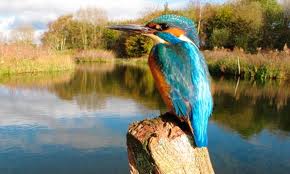
People were eager to contribute to discussions, to expand on others’ observations (a lot of “Yes, and...” as opposed to “Hmmm, but...”) and I learned much.  In an attempt to maintain the spirit and enthusiasm, let me share some of our learnings: we explored the concept of our Third Spaces (places where each of us feel content and away from criticism and judgement).  I was not surprised to learn that a fellow fishing enthusiast is most at peace on a riverbank (tight lines to him going forward – it was great to see him at the event, especially after the past couple of months that he has endured).  Another pair, whom I have known for a while, realised how important their quiet time simply walking the dog was/is – a chance to revel in the pleasure of familiar landmarks, as their canine companion leaps ahead and dashes back to rejoin them, both clearly happy bounding across, or simply taking note of, well-known fields and paths whilst appreciating being with a much-loved escort.  A number mentioned the reviving power of water – Ian Pettigrew (who works under the name Kingfisher Coach) has known this for a while, hence his chosen name for his business. 
 

I am unsure as to whether I have a specific place (the Tithe Barn at Great Coxwell has always been a special spot for me, but I have not been there for over a decade) or whether I find contentment in a combination of factors, including being able to see the sky and having running water near me, that help me to recharge myself and relax.  I do know that when I lived in a town with tall buildings around me all the time I felt an aching need to see clouds and the horizon and I am seldom happier than when I am standing quietly on a riverbank, probably fishing.


We contemplated the difference between trying to view events in a positive light (“looking for positives”) and being genuinely happy and enjoying/living a positive life.  I am writing this from Crete and therefore feel it appropriate to add some Ancient Greek thoughts, which were not raised during the session.  To a certain extent Positive Psychology can trace its roots to the Ancient Greeks: Socrates advocated the need for self-awareness and establishing an understanding as to how you fit within the world around you to achieve true happiness; Plato’s allegory of the cave confirms Western thinking that happiness requires an understanding of deeper meanings. Some modern approaches in psychology (such as CBT) are echoed in spiritual “exercises” advocated by the Stoics, who believed that a life well lived needed to be grounded in being objective and reasonable. Aristotle philosophised on the merits of eudaimonia (which means literally “the state of having a good indwelling spirit, a good genius”) as the route towards having a happy and well-lived life, with a integral link between virtue and rational activity. 

Seeking succour in an appropriate Third Space can help to ensure a person remains happy and able to appreciate the world.  So can letting others know they have played an impactful role and done things to improve your life, or indeed being told by others how much you have helped them to become happy. 


I was quite struck by the power of this type of interaction during our discussions and wanted to help encourage some of us to do something positive as a result of attending.  To that end, I have promised my fellow attendees that I will meet with and thank someone who has had a significant impact on my life.  I know who I will be seeing – all I need to do now is arrange the meeting and take the time to go to Sussex.  I will report back after the event.  I would like to encourage you to undertake a Gratitude Visit.  My offer remains for any reader of this bog and/or any fellow attendee from the Conference that would like to thank someone and share their tale (perhaps of both why gratitude is felt and your actual meeting to thank that person for their impact on your life) - I would be happy to act as a receptacle for any stories that people would like to share.  When I return from Crete I will be setting up a website on which people can post their tales (I regret that I have found that I cannot do it from here as the Internet access is too intermittent).  It would be great to get together a collection of Gratitude Visits and Thank You Stories as a way of perpetuating the energy of the Conference and inspiring others to live more positive lives.


At the Conference it was interesting to discuss why we felt that certain cultures seem more contented than others – Bhutan, Jamaica, Ireland and parts of Africa were all named as countries whose inhabitants seem positive about themselves and their environment (I was also struck by the fact that, with perhaps the exception of Bhutan, each of these locations have also suffered severe social unrest within segments of their societies, yet the general opinion on the people is that they are cheerful and genuinely appreciate the lives they have).  I am now in Crete and I would like to add Cretan to the list of positive cultures – last night I sat under ancient olive trees with some elders of the village where we are staying.  It was a pleasure to sit with them, sipping their home made wine (and tasting fresh grapes, plucked off the vine from which the wine is made – both the fruit and the wine were soft and surprisingly floral).  Our host produced a simple platter consisting of chunks of local cheese (a delicious local hard one called Graveia and a ewes' cheese that is very more-ish named Myzitra), flavoursome black olives from his trees and a hard traditional Cretan rusk (called Dakos) that he had soaked to soften in olive oil and water.  Our table was a large used cable reel, turned on its side, none of the chairs matched and the wine bottle was a recycled plastic mineral water bottle.  Simple fare in simple surroundings and yet the contentment around the table was almost palpable.  Even the local cats seemed happy.


After last night, I can join with another group of Ancient Greek thinkers, the Epicureans, in believing that happiness can be achieved through the enjoyment of simple pleasures.


Wednesday, 15 August 2012

Sprinkled Gold

Today is the anniversary of the birth of the great American chef, author and gastronome Julia Child (celebrated in the blog, book and subsequent film, starring Merly Streep as Julia, “Julie & Julia” http://www.youtube.com/watch?v=vjvJHsJD8ic ) – I am sure she would approve of my advocating that we all could benefit from adding a pinch of Olympic gold into the recipes of our lives – be it an enhanced attention to detail, the ability to interact and celebrate better with others or developing the stamina and determination to see things through to completion.  


At the risk of sounding like the repetitive echo of many others’ voices, I must confess that the London Olympic Games exceeded my expectations:
·       great atmosphere;
·       stunning venues (I particularly loved the wild flowers and the landscaping in the Olympic Park);
·       magnificent competitors;
·       friendly and not overwhelming crowds;
·       easy transport;
·       well organised (despite some infuriating ticketing issues);
·       an impactful and clever opening ceremony;
·       Thomas Heatherwick’s spectacular and inspired cauldron, with its 204 copper ‘petals’ that became going-home gifts for each of the competing nations (did you know that the UN only recognises 192 nations?);
·       superb sporting events;
·       world records broken; and a
·       rousing musical finale which provided a great introduction to Rio 2016.
 

I loved seeing and being with people happily united in the simple enjoyment of sport, shared national pride, stunned amazement at awe-inspiring spectacles and elated celebrations. What’s more, despite the current lull, it’s not over - I gather that the 2012 Paralympic Games tickets are selling out fast (it looks as though this will be the first time that all tickets will have been sold since the games were formally founded in 1960) – there will be a new ‘petal’ cauldron burning in the stadium in a fortnight.


Many things can be learned from the UK Olympic and Paralympic events, by both individuals and organisations.  There is no reason why people at work or in environments such as academia cannot love being with others, happily united in the simple enjoyment of achievement, shared pride, amazement at the accomplishments of awe-inspiring colleagues and rightful celebrations when a job is well done and goals attained or exceeded.  We have it within us to be successful and to collaborate (to huge effect) with those around us.  This (rather lengthy) talk, by the psychologist Jonathan Haidt, given to employees at Google, provides some interesting insights into why we think, respond and behave in the way that we do, especially when in groups:
It takes faith in our abilities, an understanding of the goals, careful planning, appropriate leadership and support, enablement of individual potentials to be realised (with the right people put in the right roles and given access to the right connections to get things done), perseverance, commitment and the combined will of all involved to succeed in attaining a shared objective.  A sprinkle of luck (such as the weather or wind on the day) can have an impact, but there is much truth in the golfer Gary Player’s comment that
“the more I practice, the luckier I get”.
Successful athletes in all sports practice and practice to enhance their skills.  Mo Farah had a gruelling regime (running 120 miles per week at circa 5.4 minutes per mile, as well as working out in the gym and even running on an underwater treadmill to prevent injury) that lead to his winning two gold medals.
 
 As Mohammed Ali once said:
"The fight is won or lost far away from witnesses - behind the lines, in the gym, and out there on the road, long before I dance under those lights." 


One of the reasons the London 2012 Olympics were so successful was the meticulous attention to detail.  All of the events were carefully planned and the forethought showed; even the mascots had perhaps more to them than many of us appreciate.  Although some have commented that they look like extras from the film “Monsters, Inc” and others have unkindly renamed the pair Mandelson and Prescott (a couple of famously feuding former UK Cabinet Ministers) or Pentonville and Wormwood (two renowned Victorian-built London prisons), considerable thought went into their creation.  They are supposedly made from drips of steel formed during the forging of the iron girders that built the Olympic stadium.  Their actual names are Wenlock (after the Shropshire town of Much Wenlock which held a forerunner of the current Olympic Games) and Manderville (after Stoke Mandeville Hospital where, from 1948, British War Veterans competed in the Stoke Mandeville Games, the precursor of the Paralympic Games).  Danny Boyle’s extraordinary Opening Ceremony also exemplifies some of the deep contemplation and preparation that enabled success.  It was intelligent, as well as spectacular, with messages behind every scene (The middle section named Pandemonium – after Milton’s capital of hell in “Paradise Lost” – gave me one of my lasting memories as forged rings glowed and were then raised in a cascade of sparks above the crowds)

The Opening Ceremony enabled the quirky eccentricities of the British personality to be celebrated in addition to highlighting aspects of the history that created the UK that hosted the Games. (Diversity adds to the mix and creates a stronger whole.) 

Throughout the Olympics there were lots of little touches, many of which went unnoticed, that each made a difference (such as the remote control Minis carrying javelins and hammers back and forth to officials during the Athletic events and the care shown by the numerous volunteers one even injured her fingers through high fiving so many visitors).  Rowan Atkinson’s Mr Bean was an inspired inclusion at the start, but there are some other details that probably did little more than raise a knowing smile in those in the know (for example part of the running track from the 1948 Olympics, also held in London, was buried under the Olympic Park athletics stadium site and the copper petals were completed in secrecy, only days before the start, by craftsmen who did not appreciate what they were for until they saw them on TV as they were used in the Opening Ceremony http://www.fenlandcitizen.co.uk/news/latest-news/flaming-brilliant-1-4113479 ).


The host country’s medal tally is impressive and, of course, I am pleased, but I was delighted by many other occurrences, such as when Granada’s runner, Kirani James, stormed to victory in the Men’s 400m - a first ever gold medal for the island; I was personally amused by the fact that there were more people in the Olympic Park as he won than there are in the population of Grenada. The impact of the Games on people across the country has been amazing (the often viewed as grumpy and self-controlled Brits have proven themselves warm, welcoming and passionate – I gather that this trait now will be used to encourage tourists to come to the UK). 

 The past Olympic fortnight has been inspirational and entertaining in so many ways.  I am so glad that I was able to see some events in The Olympic Park and at Greenwich – lifelong memories for me and my sons.  The Games are already living up to their motto and inspiring a generation (well they’ve inspired me at least).  I have made a personal commitment to use some of what I have learned going forward, namely:

·       I will continue to practice my skills, even those I believe I am good at, coming second isn’t good enough
·       Being a creative entrepreneur, I am not a natural completer finisher, so I will make an extra effort going forward to focus on the detail, ensuring successful implementation of plans
·       I will continue to foster and encourage diversity, thereby making a stronger and more appealing operation
·       I will make sure that the little touches are always there, as they can make the difference
·       I will keep an open mind and be prepared for the unexpected (who would have envisaged that a camper van could convert itself into an octopus?).